The Owner’s Handbook
Nobody Hands You.
The Sport of Kings has been gatekept by billionaires for three hundred years. Ownership is closer than they’d like you to know — and easier than they want you to believe.
Walk through the side entrance by joining a syndicate.
Get the free guide: 10 questions to ask before you sign any syndicate agreement.
What insiders don’t want you to know · Sunday mornings · Independent, by design

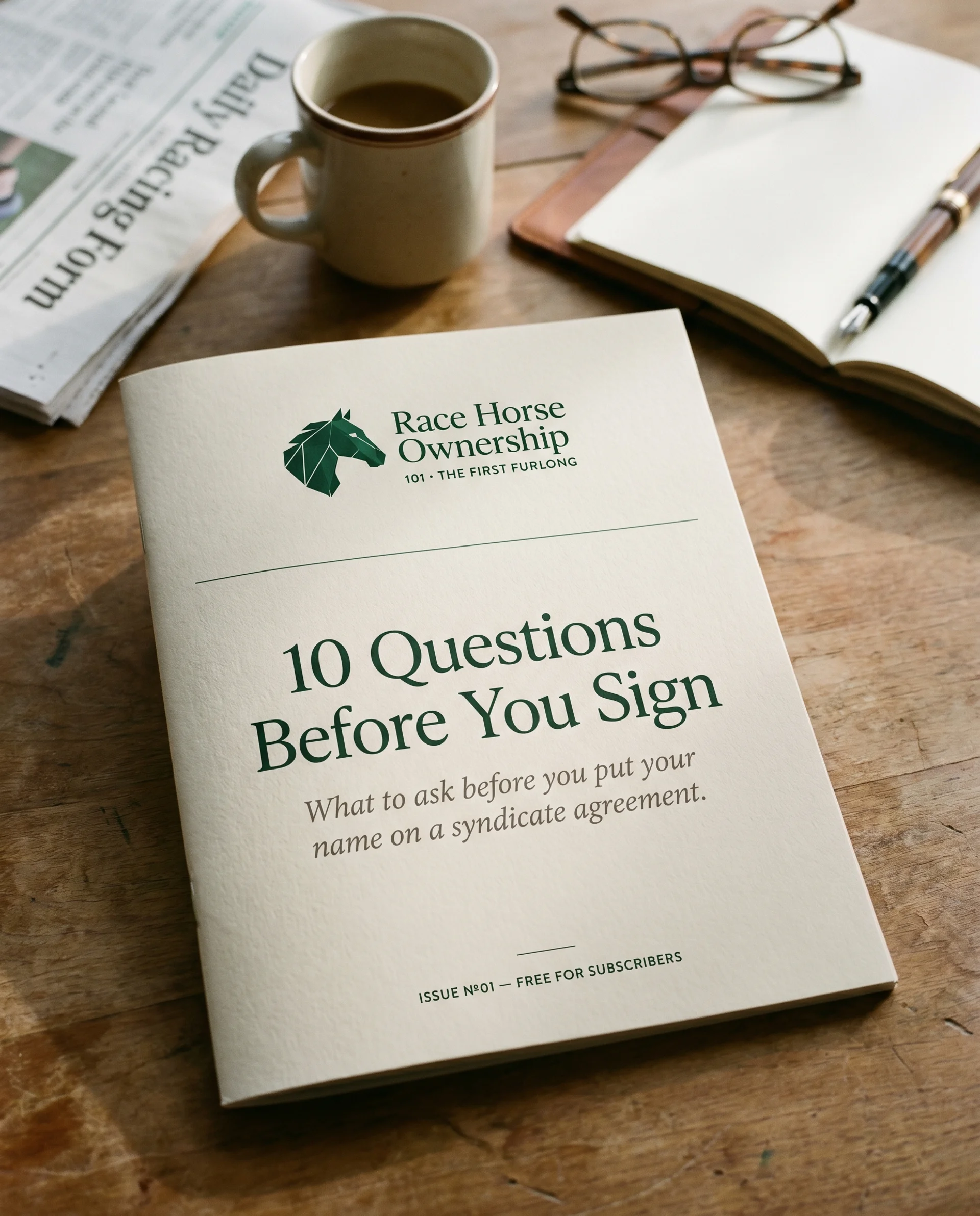
The Free Guide
10 questions to ask
before you sign anything.
The questions that separate the partnerships you’ll enjoy from the ones you’ll regret. Written from inside the sport — what to ask, what a good answer sounds like, and what to do if you don’t get one.
- The clauses every good syndicate puts in writing
- The hidden markups in purchase price that prospectuses rarely show
- The questions experienced owners ask trainers before signing
- Why the exit policy matters more than the buy-in
- What “all-in monthly fees” should and shouldn’t include
What to Read
Two ways into the work.
The chapters are designed to be read in order — a single guided arc from first interest to first signature. The blog is a growing reference of specific answers to questions owners actually ask, designed to be searched and returned to. Both are free. Both are written by current owners.
On the Chapters
A guided introduction, in four parts.
A single arc, designed to be read in order. By the end of Chapter Four, you’ll understand the structures, the economics, the partnerships, and the path that most first-time owners actually take. About an hour of reading, spread across however long you want to take it.

On the Blog
A growing reference, for the questions owners actually ask.
Short, specific answers to the questions new and experienced owners search for. What a maiden race is. How claiming works. What a trainer’s day-rate covers. The kind of writing you bookmark, share, and return to.
About the Writers
Written by people who own horses.
Race Horse Ownership 101 is written by current thoroughbred owners. We have signed the partnership agreements we describe, read the prospectuses we write about, paid the training bills we list, and stood in the paddocks before the races. The writing here is the result of those experiences — the conversations we had, the decisions we made, the things we wish we’d known before we made them.
We don’t name ourselves on the public site for a specific reason: the publication is meant to be useful regardless of who’s writing it, and naming names would pull the reader’s attention toward specific people rather than the work itself. The publication’s voice is a collective one because what’s being shared isn’t one person’s experience — it’s a pattern that holds across many owners’ experiences, written from inside that pattern.
If you want to know more, the About page goes further. If you just want to read, the chapters are where to start.

Keep Reading
One letter every Sunday.
New writing from inside the sport, every Sunday morning. Free for as long as you find it useful.