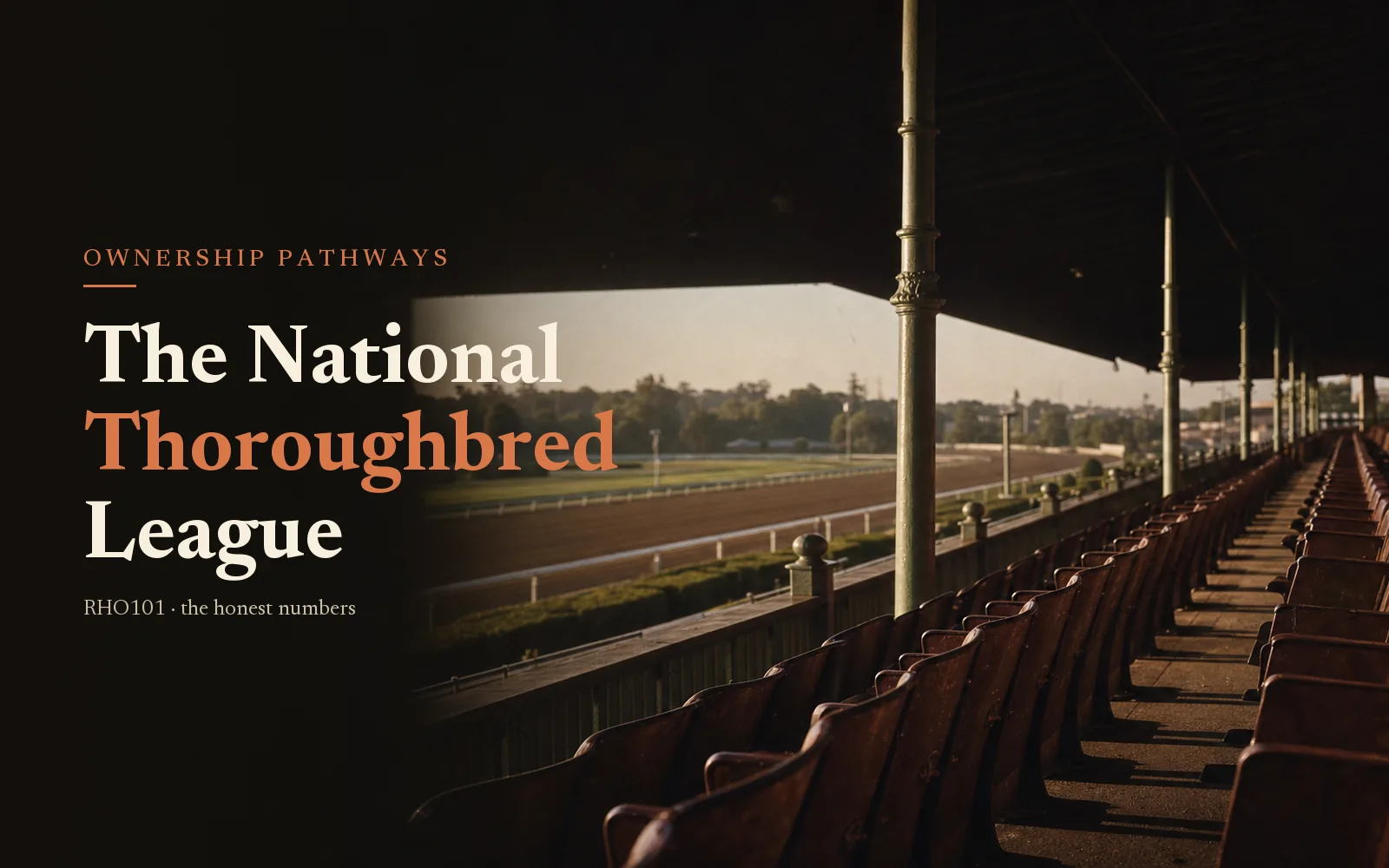
The National Thoroughbred League (NTL) is a team-based entertainment racing league — not a way to own a racehorse, and not the Horse Racing League (HRL). Ten city-branded teams, backed by celebrity ownership groups, race for season points toward a championship. If you came to it hoping to buy a share of a runner, that is the wrong product tier. The league built around teams that actually own their horses is a separate 2027 startup called the Horse Racing League, and its seats are going to major operators, not retail buyers.
The honest answer, up front
- The NTL is an entertainment league — celebrity-owned city teams, live events since 2025. It does not sell racehorse ownership to fans.
- The Horse Racing League (WinStar, Godolphin, and others, launching 2027) is the one built on teams owning horses, and its franchise seats are for established racing operations, not $10,000 buyers.
- If your real goal is to own a piece of a racehorse, neither league is your entry point. A syndicate, a partnership, or a micro-share platform still is.
The short answer: what the National Thoroughbred League is
The National Thoroughbred League is a team-format racing series that turns individual races into a season-long competition between ten city-branded teams. Each team fields a roster of horses; at each event, called an NTL Cup, all ten teams enter one horse into every race, points are awarded by finish, and those points build across the season toward an NTL Championship Weekend where one city takes the title. Races run at distances from six furlongs to a mile, on dirt and turf, and the league’s own materials say the whole event wraps in under three hours. The teams carry names and celebrity backers — the St. Louis franchise, the Nellies, is co-owned by the musician Nelly. The league sells the day as a full event, with ticketed lounges, live performances, and fan zones rather than a betting card.
Racing’s best-kept open secret: you don’t have to just watch.
Ownership groups let regular people own a share of a real racehorse. The free guide explains how it works, in ten minutes.
I read every new “ownership revolution” headline the same way: not by what it promises fans, but by what it actually sells, to whom, and at what price. On that test, the NTL is a sports-entertainment brand first. It is genuinely new — the operators call it the first team-based professional league in horse racing, and it is worth understanding. But understanding it means separating three things the search results constantly blur together.
NTL vs NTRA vs the Horse Racing League: three things people mix up
Three separate entities share the “national thoroughbred” space, and confusing them is easy. The NTL is the celebrity team-racing league. The NTRA is the National Thoroughbred Racing Association, a long-standing industry trade group with no teams and nothing to sell you. And the Horse Racing League is a different, newer venture — the one whose teams draft and own actual horses — launching in 2027 with racing operators as its franchise holders.
Which “thoroughbred league” is which
| Entity | What it is | Do teams own horses? | Who it’s for |
|---|---|---|---|
| National Thoroughbred League (NTL) | Team-format racing entertainment league; celebrity-owned city teams; live events since 2025 | Not for the public — reporting indicates it stepped back from a direct-ownership model; teams field rosters as a competition and entertainment product | Fans and event-goers (tickets, lounges) |
| Horse Racing League (HRL) | Separate startup launching 2027; ten teams draft from an 80-horse pool and own their eight horses | Yes — teams literally own their drafted horses | Established racing operators as franchise owners |
| NTRA | National Thoroughbred Racing Association — an industry trade and marketing association | No — it is a trade body, not a league | The racing industry; not an ownership path |
Keep that table in mind for the rest of this guide. When a headline says a “horse racing league” is signing up Godolphin and WinStar, it is describing the 2027 Horse Racing League — not the celebrity NTL, and not the NTRA.
How team racing actually works in the NTL
An NTL season works like a points league: ten teams, a shared race schedule, and standings that carry from event to event. The format borrows the shape of stick-and-ball sports and drops it onto a racetrack. Here is the structure, stripped of the marketing.
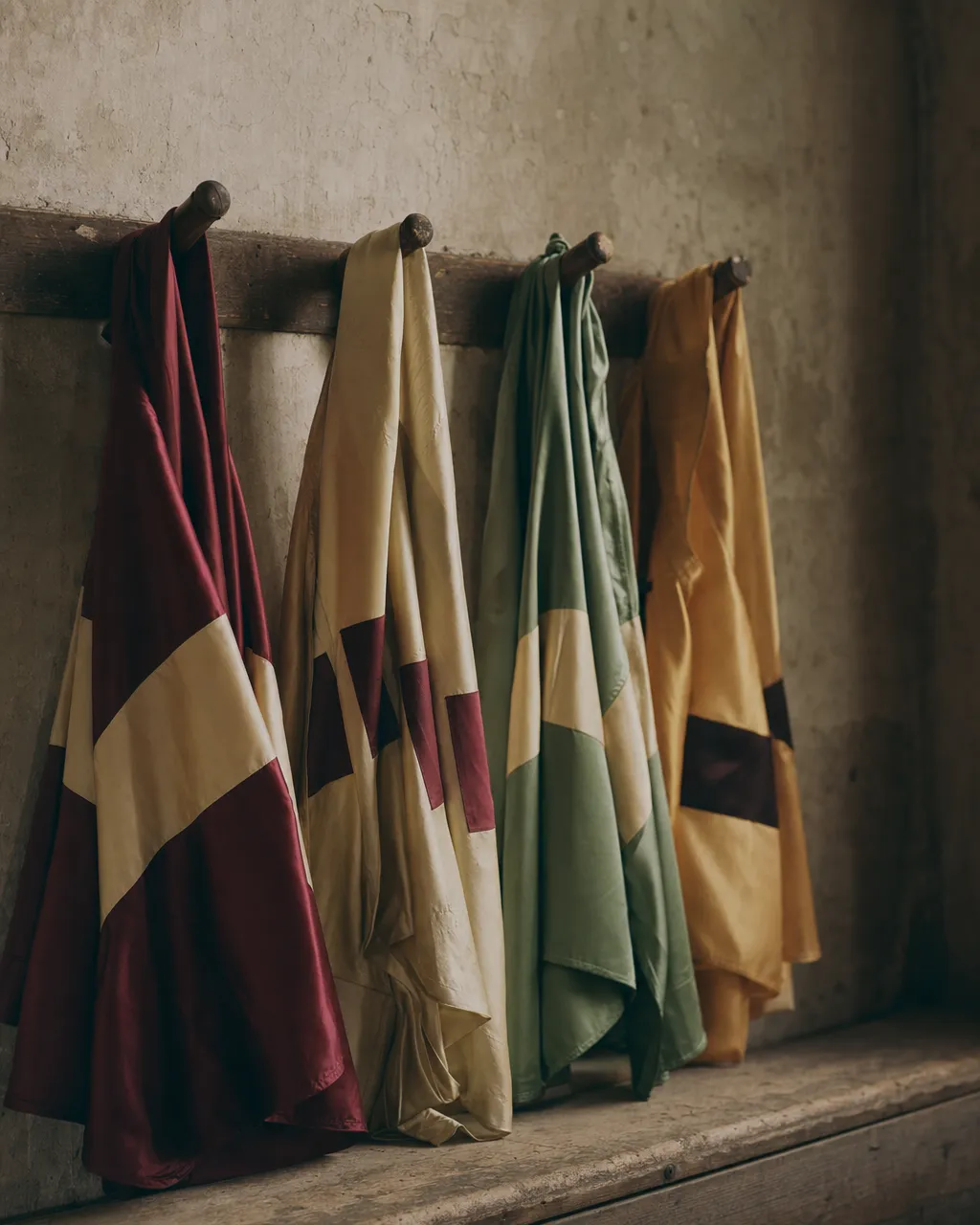
- Ten teams. Each is city-branded with its own colors and a celebrity or investor ownership group.
- Rosters. Every team carries a stable of horses and enters one into each race on the card.
- The NTL Cup. At each event, all ten teams run a horse in every race; finishing positions convert to team points.
- A points season. Points accumulate across events toward the season standings.
- The championship. The standings decide who reaches NTL Championship Weekend, where one city claims the title.
For a fan, that is a clean, fast way to follow a day of racing without a program and a Racing Form. For a prospective owner, the important detail is what is missing: there is no described mechanism by which a member of the public owns any of the horses running under these team colors. You buy a ticket, not a stake.
Who owns NTL teams, and what it costs
NTL teams are held by celebrity and investor ownership groups, and the price of a team has not been made public. Nelly took what BloodHorse described as a significant ownership stake in the St. Louis franchise; other names attached to the league include Lamar Jackson, Julius Erving, Tanya Tucker, Rick Ross, and Jarobi White. What none of the coverage includes is a number: no franchise price, no buy-in figure, no published cost of a seat.
That silence matters more than it looks. Trade chatter has floated franchise figures in the millions for team-league seats, but I have not found a primary source that confirms a specific price for an NTL team, and the organizers of the related 2027 league declined to disclose their join fee when asked directly. When a product’s price is not published, the honest move is not to repeat a rumored number as if it were a fact. It is to treat the absence of a price as the answer: if you have to ask, and the number is not on a page anywhere, this is not a retail product.
An ownership opportunity that will not publish its price is not an ownership opportunity you can evaluate. It is an invitation to a negotiation you are not in.
Can you actually buy into the National Thoroughbred League?
For an ordinary buyer, no — the National Thoroughbred League does not offer a public path to owning a racehorse or a share of one. It sells tickets, hospitality, and a team to root for. Team ownership is a private, invitation-level arrangement among celebrities and investors, with no published price and no retail tranche. The 2027 Horse Racing League, the one actually built on owning horses, is aiming its franchises at established racing operations — WinStar, Godolphin, and a partnership of Gary Barber, Vinnie Viola, and Chris Pucillo are among the confirmed team owners reported by the Daily Racing Form, and its structure (ten teams drafting eight horses each from an 80-horse pool, purses funded by the league) is an operator’s game, not a $5,000 entry point.
None of that makes the NTL a scam or the HRL a bad idea. Both may be good for the sport. But a would-be owner who reads “new league, new ownership” and pictures an accessible on-ramp has misread the tier. Consider a first-time buyer with $20,000 set aside and a genuine interest in the game: the league headlines are not describing anything they can buy. What they can buy is a share of a real horse through the ownership structures that already exist, and those deserve a straight comparison.
The leagues vs the ways you can actually own
Set the two leagues beside the paths that genuinely let a member of the public own a piece of a racehorse, and the tiers separate cleanly. The table below compares minimum realistic capital, how much control you get, how easily you can exit, and who each option actually fits.
Ownership tiers compared: from league franchise to micro-share
| Path | Realistic minimum | Control | Liquidity / exit | Who it actually fits |
|---|---|---|---|---|
| NTL team | Undisclosed (private, celebrity/investor tier) | Team-level; not horse ownership for the public | None for fans; private for team holders | Celebrities and investors, by invitation |
| HRL franchise (2027) | Undisclosed; operator-scale | Full ownership of drafted horses (team level) | Illiquid; franchise-level | Established racing operations |
| Traditional syndicate / partnership | ~$5,000–$50,000+ per share | Limited; manager runs the horse | Illiquid; sell only if the manager allows | Serious hobby owners who want a real say-adjacent stake |
| Micro-share platform | ~$50–$1,000 per micro-share | None operationally; you hold a small economic interest | Very limited; platform-dependent | Fans wanting the experience and paperwork of ownership, cheaply |
| Sole ownership | Purchase price plus ~$30,000–$80,000+ / year to keep | Total | Sell privately or at auction | Well-capitalized owners who want full control |
The leagues sit at the top of that table, in a tier most readers will never buy into. The bottom three rows are where actual public ownership happens. We have written independent guides to each: whether buying shares in a racehorse is worth it at all, how to read MyRacehorse reviews against what the SEC filings actually show, and what is really inside a syndicate or partnership agreement before you sign. Start there if ownership, not spectating, is the goal.
One number keeps the whole comparison honest. Fewer than roughly 8–10% of racehorses earn enough in purses to cover their costs, according to figures from the Thoroughbred Owners and Breeders Association. Whichever row you land on, ownership is mostly an entertainment expense, not an investment. That holds at the micro-share level and the franchise level alike.
What to watch before the 2027 Horse Racing League season
Before the 2027 Horse Racing League draft and races, the details worth watching are the ones that decide whether any of this ever reaches ordinary owners. The league plans three events in 2027 — targeted for February, March, and April — with a draft the preceding November and four races per event, two on dirt and two on turf. Everything below the franchise tier is still unwritten.

- Whether any retail tranche appears. If either league ever opens a public micro-share or fan-ownership layer, that is the moment it becomes relevant to most readers. Until then, treat “ownership” language as marketing.
- Whether prices get published. A franchise or buy-in figure that finally appears in a filing or a credible report is worth more than a year of press releases.
- How horses are sourced and retired. A league that owns horses owns their aftercare too. Watch what it commits to on retirement and welfare.
- The gap between spectacle and substance. A fast, fun three-hour event is a good fan product. It is not evidence that the underlying economics work for owners.
If you are weighing a real stake in the meantime, the same discipline applies to the leagues that applies to any manager or platform: read the agreement, confirm the fees, and vet the people running it. Our independent checklist for vetting a syndicate or partnership manager is the right starting point — the questions it asks are exactly the ones neither league has answered in public yet.
FAQ
What is the horse racing league called?
Two different ventures use the “league” framing. The National Thoroughbred League (NTL) is the live, celebrity-owned team-racing entertainment league. The separate Horse Racing League, launching in 2027, is the one whose teams draft and own their horses. They are not the same organization.
What is the National Thoroughbred League, and which teams are in it?
The National Thoroughbred League (NTL) is a celebrity-backed, city-branded team-racing entertainment league — live events since 2025 — not a public racehorse-ownership product. Team ownership sits with private investor and celebrity groups. Public reporting has attached names including Nelly (St. Louis franchise), Lamar Jackson, Julius Erving, Tanya Tucker, Rick Ross, and Jarobi White (BloodHorse). A full official roster and franchise prices have not been published as a single retail list; treat unnamed “teams” and rumored buy-in figures as unconfirmed until a primary source posts them.
Is the NTL the same as MyRacehorse?
No. MyRacehorse is a micro-share platform that sells small, regulated ownership stakes in specific horses to the public. The NTL is a team-format spectator league that does not sell horse ownership to fans. If your goal is to own a fractional interest, a platform like MyRacehorse — read critically — is far closer to what you want than any league seat. For the wider map of what people mean by invest in horse stocks (platforms vs leagues vs public tickers), that guide keeps the categories separate.
How much does an NTL team cost?
The price of an NTL team has not been publicly disclosed. Coverage names celebrity and investor owners but not figures, and the organizers of the related 2027 league declined to state their join fee. Any specific dollar amount you see quoted for a team should be treated as unconfirmed until it appears in a primary source.
Is the NTL the same as the NTRA?
No. The NTRA is the National Thoroughbred Racing Association, an industry trade and marketing body. The NTL is a for-profit team-racing league. They share three letters and nothing else; a search for “NTL” that returns NTRA results has returned the wrong entity.
About the Author

Calvin Johnson is a Thoroughbred racehorse owner, day trader, and independent racing analyst with more than a decade of firsthand ownership experience. He has participated in nearly every common structure in horse racing — fractional platform shares, traditional syndicates, LLC partnerships, claiming ventures, and outright ownership — across more than two dozen horses. Calvin writes about racehorse ownership the same way he approaches markets: by studying risk, incentives, fees, and whether the people controlling the deal are aligned with the investors behind it.
- Calvin Johnsonhttps://racehorseownership101.com/author/calvin-johnson/

- Calvin Johnsonhttps://racehorseownership101.com/author/calvin-johnson/
- Calvin Johnsonhttps://racehorseownership101.com/author/calvin-johnson/
- Calvin Johnsonhttps://racehorseownership101.com/author/calvin-johnson/