Best States to Own and Race Horses in the US
So you want to own a racehorse—or at least a piece of one. Whether you’re dreaming of the Kentucky Derby or just want to be part of the game without bankrupting yourself, where you base your operation matters more than you might think. State tax rules, purse structures, breeder incentives, and even the weather can swing your cost structure and your odds of turning a profit. Reddit threads and horse-racing forums overflow with questions from newcomers: “Where should I buy?” “Which state has the best purses?” “Is Florida or Kentucky better for a first-time owner?” The answers aren’t one-size-fits-all. Here’s a practical tour of what makes each racing region tick, and how to match your ownership style to the right geography.
You’re already studying the sport. Own a piece of it.
Every question you’re asking is one owners ask every morning at the barn. The free guide takes you from fan to owner.
Tax Advantages by State for Racehorse Owners
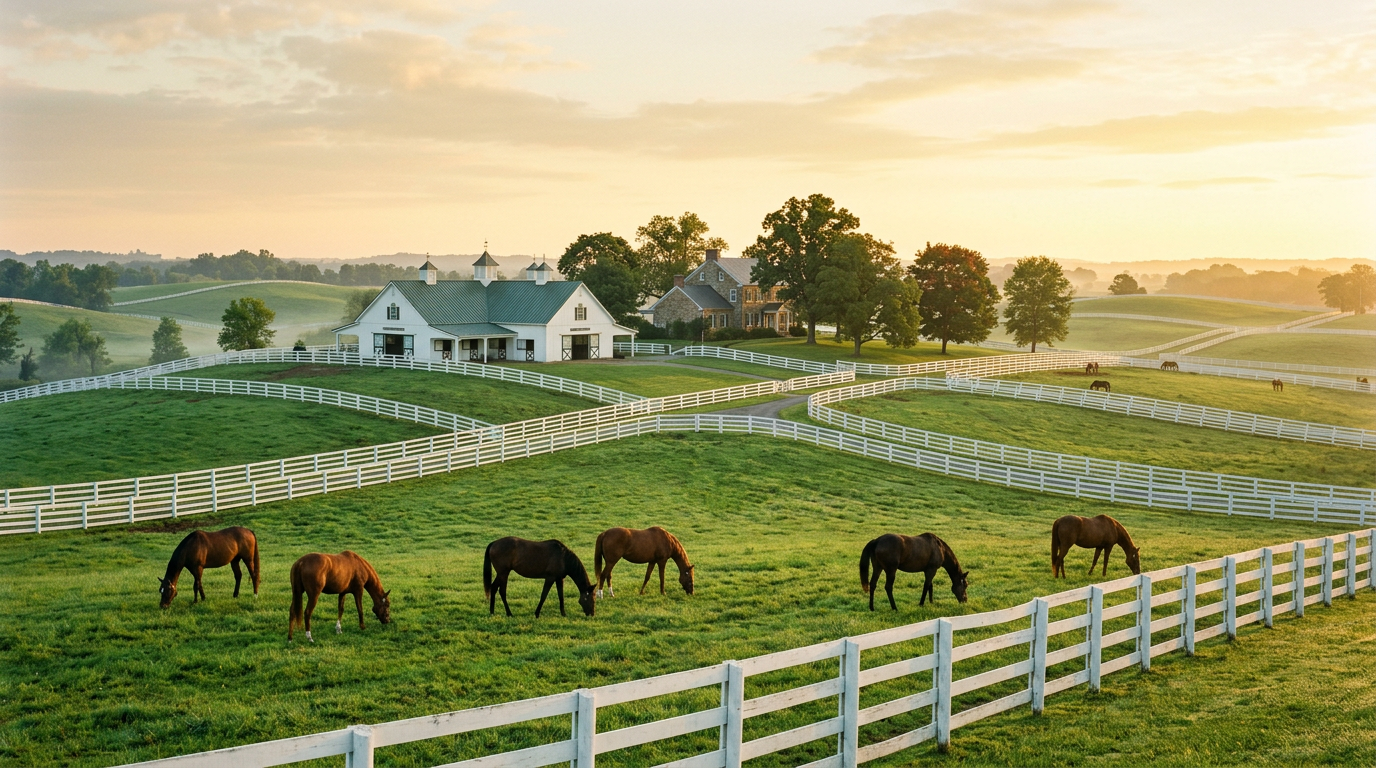
Tax treatment varies wildly from state to state. Kentucky levies a 6% sales tax on horse sales, but that same tax funds the Kentucky Thoroughbred Development Fund, which pours money back into purses for Kentucky-breds. The Bluegrass State’s Thoroughbred Breeders’ Incentive Fund has distributed over $200 million since 2005, rewarding breeders for keeping mares in state through foaling. Florida offers sales tax exemptions for horses purchased for breeding and for interstate sales—when you ship by common carrier to a buyer in another state, the transaction often escapes the seller’s state tax. New York exempts qualifying racehorses from sales tax if they’re registered for pari-mutuel racing and purchased with intent to race. California has its own quirks, including property tax filings for racehorses. The takeaway: don’t assume every state treats your purchase the same way. A quick call to a local equine accountant before you buy can save thousands.
States like Pennsylvania and Louisiana have leaned on slots and gaming revenue to juice purses and create tax-friendly environments for horsemen. Maryland has made pushes to keep breeders in-state with incentive funds. Even smaller racing states—New Mexico, West Virginia, Iowa—often have carve-outs for equine purchases that differ from standard sales tax rules. The key is doing the homework before you ink the deal. One owner we’ve heard about bought a horse in Texas, raced it in Arkansas, and retired it to Kentucky—three different tax regimes, three different sets of paperwork. Plan ahead.
Purse Money and Stakes Opportunities by State
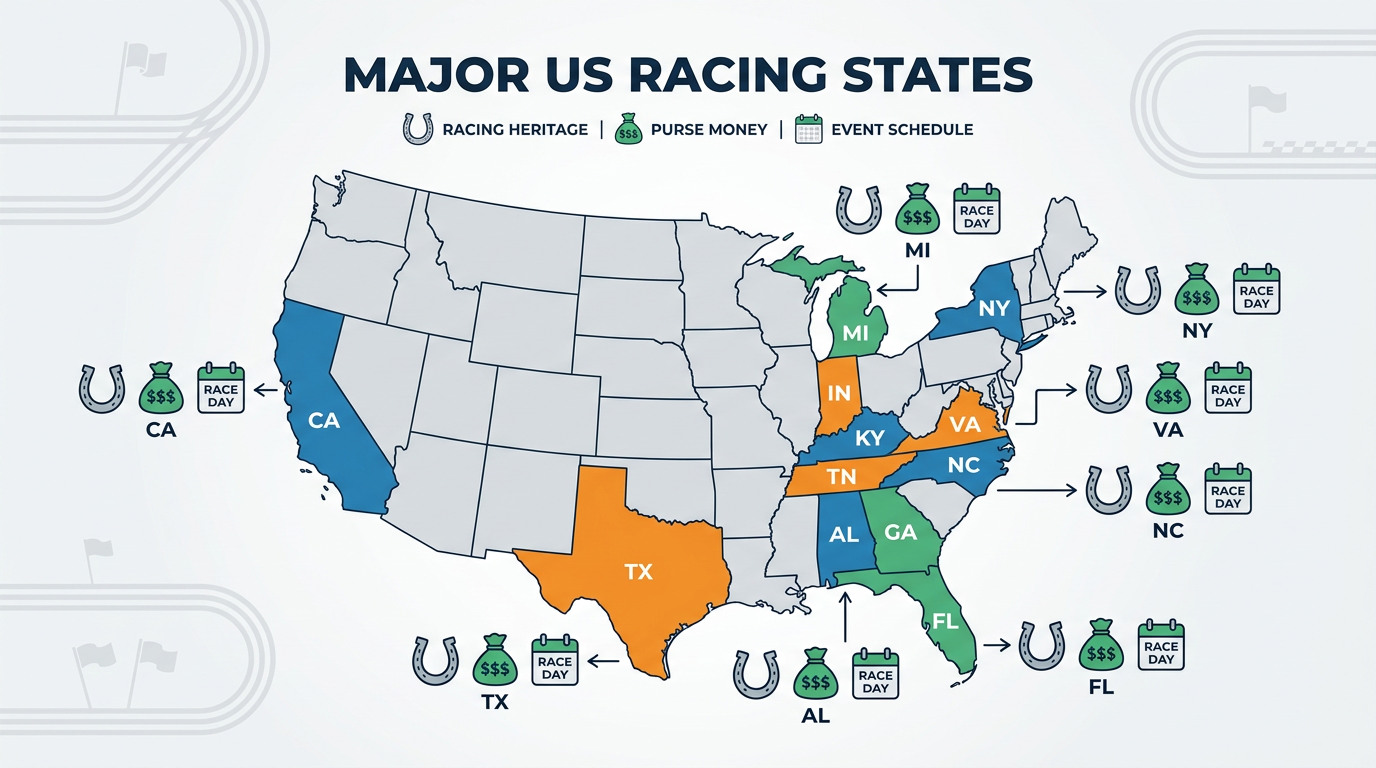
Purse money drives everything. Kentucky Downs leads North America with mind-boggling daily averages—in 2024 the track paid out over $34 million total across 76 races, with per-day averages that dwarf most tracks. Saratoga, Keeneland, Del Mar, and Churchill Downs consistently rank among the top by average daily purses. New York historically tops state-by-state totals (around $180 million in recent years), followed by California, Pennsylvania, Florida, and Kentucky. But here’s the twist: Kentucky’s statewide total looks smaller because the state spreads racing days across fewer venues with shorter meets—when they run, the purses are serious. Florida’s Gulfstream Park runs nearly year-round with solid daily purses, making it a workhorse for owners who want consistent earning opportunities. Pennsylvania’s slot-fueled purses have made it a major player. Bottom line: if you’re chasing purse money, remember that purse size drives where the money horses run: the big circuits (NYRA, Churchill, Stronach, Del Mar) are where the action is, but don’t sleep on tracks like Oaklawn, Fair Grounds, or Tampa Bay for value.
Industry reports put U.S. racing purses north of $1.3 billion annually, with wagering handle over $11 billion. The top tracks by average daily purse in recent years read like a who’s who: Kentucky Downs at the very top, then Saratoga, Keeneland, Del Mar, Churchill. Maiden races at Kentucky Downs for Kentucky-breds can hit $150,000—some of the richest in the world. Stakes opportunities follow the money: Breeders’ Cup, Derby preps, and Grade 1 events concentrate at these venues. If you’re running claimers, the margins are thinner everywhere, but tracks with slot revenue tend to offer better bottom-rung purses than those without. Do the math on your class level and your circuit. BloodHorse and OwnerView publish annual purse rankings by track; use those to compare apples to apples. The first nine months of 2025 saw total purses around $975 million—slightly down from the prior year but still substantial. Track closures and calendar shifts continue to reshape the map, so stay current.
State Breeder Incentive Programs
Breeder incentives can pad your returns significantly. New York’s program, run by the Thoroughbred Breeding and Development Fund, distributes more than $15 million annually in breeder, owner, and stallion owner awards. New York-sired breeders get 40% of first-place purse, 20% for second, 10% for third—capped at $40,000. Non–New York–sired breeders still get 20%, 10%, and 5% with a $20,000 cap. Stallion owners get 10% for top-three finishes, capped at $10,000 per horse per race. Kentucky’s Breeders’ Incentive Fund awards based on racetrack earnings of Kentucky-bred foals, with funding from a percentage of stallion breeding fee taxes. Over 4,100 races globally are eligible. Florida, Maryland, Louisiana, and other states run their own programs—some tied to slot revenue, some to sales tax. If you’re breeding, choosing a state with strong incentives can add five or six figures to your annual bottom line.
Trainer Magazine publishes an annual state incentives roundup that’s worth a read—the landscape shifts as legislatures tinker with gaming and agricultural budgets. Some programs favor resident stallions; others reward foals born in-state regardless of where the stallion stood. Maryland, New Jersey, and West Virginia have historically had meaningful breeder funds. Louisiana’s program has drawn breeders to that state. The paperwork and registration deadlines can be strict—miss a filing and you might forfeit an entire year of awards. Stay on top of eligibility rules and renewal dates. A good breed organization or state thoroughbred association can help navigate the bureaucracy.
Cost of Training and Boarding by Region
Training and board costs can swing by thousands per month depending on where you land. California and Florida sit at the high end: full board with training in Southern California often runs $2,200 to $6,000 or more per month. Wellington, Florida—with its winter show circuit—can hit $3,000 to $5,500 monthly during peak season. Kentucky and the Midwest tend to be more moderate: full board in the Bluegrass often falls between $1,000 and $3,000 depending on facility and trainer. Ocala, despite being in Florida, often undercuts South Florida prices while still offering top-tier facilities. Regional cost drivers include land prices, labor, hay and feed availability, and competition for stalls. Expect 8% to 12% annual increases in many markets. Budget accordingly, and factor in vanning costs if you’re shipping between circuits.
Pasture board runs cheaper—$250 to $550 in lower-cost areas, $550 to $1,200 in California—but racehorses typically need more than pasture. Partial board (you supply some care) falls between pasture and full. The real sticker shock comes when you add training: a top trainer with a proven record commands premium rates. Some owners run multiple horses to spread fixed costs; others partner up to share training fees. Hay and fuel spikes in recent years have pushed numbers up across the board. If you’re comparing regions, get quotes from at least three trainers or farms before committing. Word of mouth in racing circles is gold—ask around at the track.
Racing Calendar Length and Seasonality
Some states run almost year-round; others pack their action into short, intense meets. Florida’s Gulfstream runs roughly 10 months, with Palm Meadows for training. California’s Santa Anita and Del Mar split the calendar—Santa Anita in winter and spring, Del Mar in summer. New York’s Saratoga runs about 40 days in July and August, but Aqueduct and Belmont fill the rest of the year. Kentucky’s calendar is concentrated: Churchill in spring and fall, Keeneland in April and October, Kentucky Downs in September. If you want to race consistently without constant shipping, Florida and California win on calendar length. If you’re chasing the big stakes and can move horses, the Northeast and Kentucky circuits offer the prestige—but you’ll need a plan for the off-months.
Saratoga’s 2026 meet runs July 3 through September 7, dark Mondays and Tuesdays except Labor Day—the Whitney, Travers, and Alabama anchor the stakes schedule. Del Mar’s summer meet features the Bing Crosby and Eddie Read; the track sits dark in winter. Churchill’s spring meet builds toward the Derby; the fall meet captures Breeders’ Cup prep season. The “circuit” mentality means many stables migrate: Florida in winter, Kentucky in spring, Saratoga in summer, back to Kentucky or California in fall. If you’re not following the circuit, you need a home base where you can race regularly—Florida and California fit that bill. Turf courses in some northern tracks take a beating in winter; synthetic surfaces and all-weather tracks have eased but not eliminated seasonal limits.
Quality and Number of Racetracks per State
Density and quality matter. Kentucky packs Churchill Downs, Keeneland, Kentucky Downs, and Ellis Park into a small footprint—the epicenter of American racing. New York boasts Saratoga (one of the world’s best), Belmont Park, and Aqueduct. California has Santa Anita, Del Mar, and Los Alamitos. Florida offers Gulfstream, Tampa Bay Downs, and historically Calder. Pennsylvania runs Parx, Presque Isle Downs, and Penn National. States like Arkansas (Oaklawn), Louisiana (Fair Grounds, Delta Downs), Maryland (Pimlico, Laurel), and New Jersey (Monmouth) round out the map. Fewer tracks can mean less competition for stalls but also fewer racing opportunities—more tracks usually means more options and more shipping. Match your stable size and budget to the circuit.
America’s Best Racing and similar sites rank tracks by atmosphere, stakes quality, and fan experience. Saratoga regularly tops “best of” lists—the Victorian grandstand, the town, the Travers. Churchill has the Derby and the Twin Spires. Del Mar markets itself as “where the turf meets the surf.” Keeneland’s limestone beauty and auction pavilion make it a pilgrimage site. Smaller venues—Oaklawn, Fair Grounds, Tampa—offer racing that’s often more accessible and less frenetic. New Mexico has six tracks including Sunland Park and Ruidoso Downs; the landscape there is unique. Texas and West Virginia have active circuits. The point: you’re not limited to the marquee names. Plenty of good racing happens off the beaten path. Sunland Park in New Mexico, Sam Houston in Texas, and Charles Town in West Virginia each have loyal followings. The tradeoff is often smaller purses and thinner fields, but lower costs and less competition for stalls. Some owners prefer the intimacy of a regional circuit—you get to know the regulars, the backstretch has a community feel, and the pressure is different. Others want the big stages. There’s no wrong answer, only a mismatch between your expectations and the circuit you choose.
State Licensing and Regulatory Requirements
Every jurisdiction requires an owner’s license. Most want an application, a fee, and sometimes fingerprints. Pennsylvania and Indiana require licensing for anyone with 5% or greater ownership or beneficial interest. The National Racing Compact lets you apply for licenses in multiple states through one process—huge if you’re racing in several regions. Requirements vary: some states want financial disclosure, some want full ownership transparency, and minor owners may need a parent or guardian affidavit. Renewals are typically annual, though a few states offer multi-year options. The paperwork is tedious but non-negotiable—racing without a license can get your horse scratched and your participation suspended.
Thoroughbred OwnerView maintains a directory of state racing commissions—Arizona, Arkansas, California, Delaware, Florida, Illinois, Indiana, Iowa, Kentucky, New Jersey, Pennsylvania, West Virginia, and more. Each commission has its own forms and timelines. You typically need a horse eligible to race, registered with the racing secretary, and under a licensed trainer. Some states run background checks; a history of financial or legal issues can delay or deny approval. If you’re in a microshare, the platform usually handles licensing for the entity; you may not need an individual license. Traditional partnerships and full ownership almost always do. Start the process early—approvals can take weeks. New Mexico, Texas, West Virginia, and other states participate in the National Racing Compact, which streamlines multi-state licensing. If you’re racing in three or four jurisdictions, that single application can save hours of duplicated paperwork. Check whether your state has reciprocity agreements—some recognize licenses from other states with minimal additional steps. The compact and reciprocity programs have made it easier for owners to campaign horses across regions without getting bogged down in bureaucracy. Still, each commission has the final say; a denied license in one state doesn’t automatically mean denial elsewhere, but it can raise flags.
Owner-Friendly Track Perks and Access
Owners get perks at most tracks: paddock access, parking passes, owner lounges, and sometimes complimentary food and drinks. Churchill Downs offers Millionaires Row and the Paddock Club for premium experiences. UK tracks like Epsom have dedicated owner lounges with full hospitality—the U.S. is catching up. Saratoga and Del Mar are known for treating owners well, with reserved areas and parade ring access. Smaller tracks may offer less glitz but often more personal attention. If you’re in a microshare or partnership, check what your syndicate negotiates—some platforms include race-day access and stable tours. The vibe varies: Saratoga feels like a summer party; Del Mar leans coastal cool; Kentucky Downs feels boutique and high-stakes.
Forbes and other outlets have profiled Churchill’s seating tiers—from general admission to private boxes. Owner badges typically get you into the paddock, winner’s circle for your horse, and designated viewing areas. Some tracks have owner-only dining; others offer discounts on hospitality packages. The experience differs by track and by meet. Kentucky Downs, with its short, high-stakes calendar, tends to roll out the red carpet. Aqueduct in January is more utilitarian. If track experience matters to you—and for many owners it’s a big part of the draw—prioritize circuits known for hospitality. The social side of ownership is real: networking, barn tours, and the thrill of watching your colors in the parade ring. Saratoga’s backstretch breakfast is legendary; Del Mar’s seaside setting draws owners who want to combine racing with a vacation. Keeneland’s tailgating culture and limestone beauty create a distinct atmosphere. The “best” track experience is subjective—some prefer the glamour of big meets, others the no-frills focus of a workmanlike circuit. Try a few before you commit.
Availability of Top Trainers and Jockeys
Access to elite talent clusters in key regions. Kentucky is home to Brad Cox (104 wins in Kentucky in 2025, leading in earnings), Steve Asmussen, and Brendan Walsh. Jose Ortiz and Irad Ortiz Jr. dominated the jockey standings there. California has Bob Baffert, who continues to stack Grade 1 wins and Breeders’ Cup success. Todd Pletcher splits time between Florida and New York. Gulfstream and Palm Meadows draw winter strings from top East Coast barns. If you want a marquee trainer, you’ll likely base in Kentucky, Florida, or California—or ship in for specific races. Second-tier circuits have solid local talent but fewer household names. Choose your circuit based on who you want conditioning your horse.
The jockey colony migrates with the circuit. Ortiz brothers, Tyler Gaffalione, and Flavien Prat show up where the stakes are. Baffert’s operation is California-centric but ships for majors. Cox and Asmussen have strings in multiple states. Getting a top trainer’s attention isn’t just about writing a check—many have full barns and select clients. Newer owners often start with up-and-coming trainers who have more availability and hunger. BloodHorse and the Daily Racing Form publish annual trainer and jockey rankings by wins and earnings; use those as a starting point. The right trainer can make or break a horse. Geography matters because you need to be where they are.
Sales and Auction Access (Keeneland, OBS, Fasig-Tipton, etc.)
The major auctions concentrate in a few hubs. Keeneland and Fasig-Tipton are both in Lexington—Keeneland runs the flagship September yearling and November breeding stock sales, plus select 2-year-old sales. Fasig-Tipton holds the Saratoga select yearling sale, the November sale, and various 2-year-old and breeding auctions. OBS (Ocala Breeders’ Sales) operates in Ocala, Florida—their March 2-year-old sale is a major destination for young horses. Being near Lexington puts you an hour from Keeneland and Fasig-Tipton; Ocala gives you OBS and a growing sales calendar. If you’re buying at auction, proximity cuts down on shipping and inspection trips. If you’re consigning, the same logic applies—location matters for both buyers and sellers.
Buyer registration typically requires a Keeneland or Fasig-Tipton account, credit approval, and sometimes a deposit. Online bidding is available at Fasig-Tipton (bidonline.fasigtipton.com); approval can take up to 48 hours, so register early when the catalog drops. OBS runs under-tack shows before their 2-year-old sales—you can see horses work before bidding. The OBS March sale kicks off the juvenile season each year. Lexington’s concentration of sales companies makes it the global capital of thoroughbred auctions; Ocala has carved out a strong niche for 2-year-olds and regional buyers. If you’re buying weanlings or yearlings, Kentucky is hard to beat. If you want ready-to-run 2-year-olds, OBS and Fasig-Tipton’s juvenile sales are the main stages. Regional sales in Texas, California, and elsewhere offer smaller catalogs but can yield bargains—especially for state-bred programs where local buyers get bonus incentives. The OBS March sale kicks off the 2-year-old season; the Keeneland September yearling sale sets the tone for the breeding market. Timing your purchase to the right sale and the right location can affect both price and the quality of horses on offer. Do your homework on catalog composition, under-tack show results, and recent sale averages before you bid.
Shipping and Logistics Between Major Circuits
Moving horses costs money and adds stress. Ground transport typically runs $1.50 to $2.50 per mile depending on distance and trailer type. Short hauls (under 100 miles) often run higher per mile. Cross-country moves—say, Michigan to California—can hit $3,000 or more. Shared trailers are cheaper; dedicated climate-controlled rigs cost more. Health certificates, Coggins tests, and Jockey Club paperwork are standard. Some tracks offer “shuttle” policies where the host track pays return shipping if the horse races and returns within a week. Overnight stops usually happen around 850 miles. If you’re racing in multiple regions, budget for vanning and factor shipping into your race selection—constant cross-country hauling wears on horses and wallets.
Lawrence Racing Stables and similar transporters specialize in racehorse hauling with premium trailers and race-day scheduling. Factors that affect price: distance, fuel costs, number of horses (multi-horse discounts exist), vehicle quality, route complexity, horse size, urgency, and season. uShip and other marketplaces quote routes like Georgia-to-Florida around $765–$950; Michigan-to-California can exceed $3,250. Professional outfits provide overnight stalls, feed, and water on long trips. Trainers often have preferred shippers; tap into that network. Racing associations sometimes subsidize or coordinate vanning for stakes events—check with the host track. The goal is getting the horse there fit and on time. Cheap shipping that arrives late or stressed isn’t a bargain. Gayle Van Leer Thoroughbred Services and similar consultants outline the paperwork: health certificates, Coggins, Jockey Club papers, racing silks. Some tracks require specific documentation before they’ll accept a horse. Plan ahead—last-minute shipping often costs more and increases the chance of hiccups. If you’re building a multi-circuit campaign, map the vanning costs into your budget from day one.
Climate and Training Conditions Year-Round
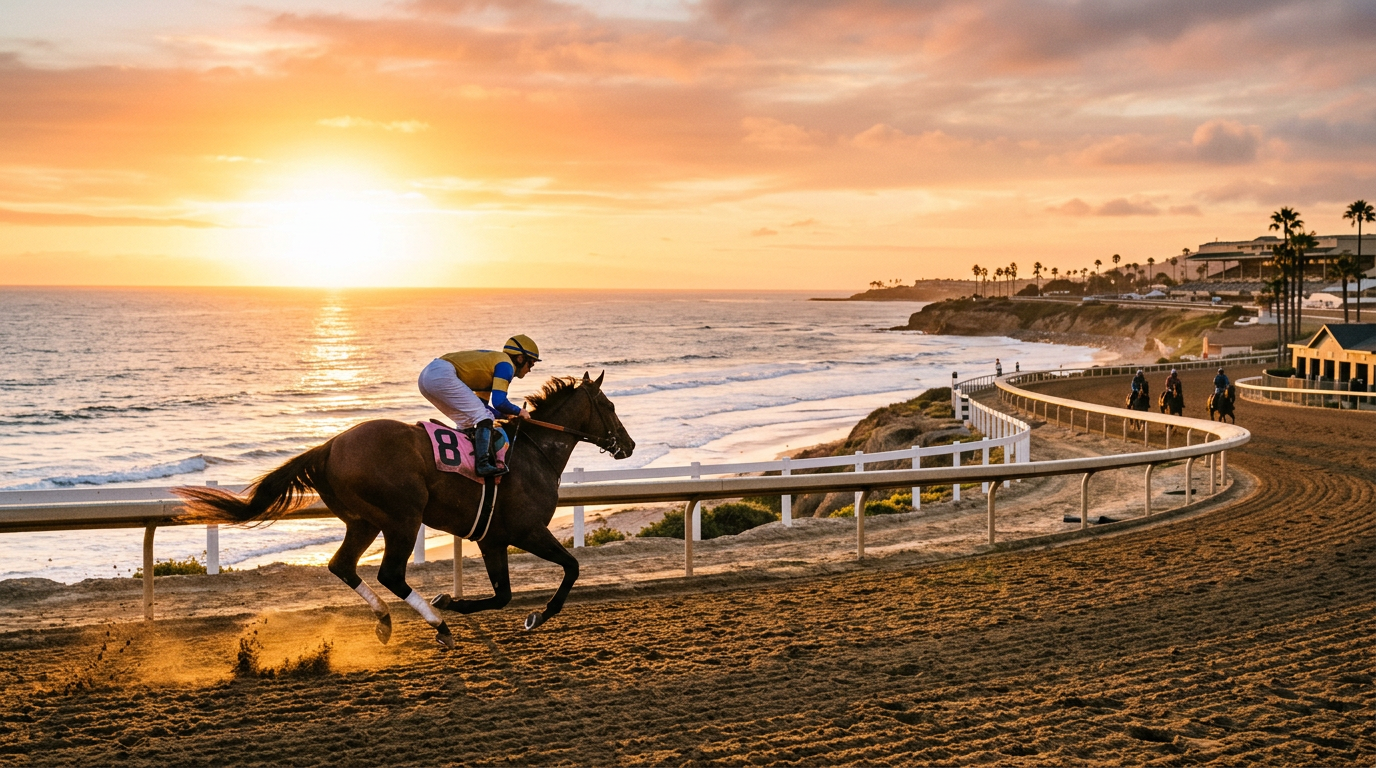
Weather affects training and horse welfare. Florida and Southern California allow year-round outdoor work with minimal winter disruption. Gulfstream and Palm Meadows offer deep surfaces for stamina-building works; Todd Pletcher and others use the Florida winter to prep Derby horses. California tends toward sharper, speed-oriented training. Kentucky sees cold winters that can limit turf work and add bedding and heating costs. New York’s winter racing at Aqueduct tests horses with cold stress—some research suggests winter racing in northern climates diverts energy toward thermoregulation, potentially impacting recovery. If you want consistent training 12 months a year, Florida and California win. Kentucky and the Northeast offer world-class racing but with seasonal constraints.
The EPA and climate researchers have flagged risks for Kentucky’s thoroughbred industry: extreme precipitation, flooding, and warming temps that affect horse welfare. Turf courses in the North can be sealed or off-limits in winter; synthetic surfaces help but aren’t universal. Gulfstream has experimented with near year-round racing—successful by some metrics, though turf wear is a concern. California’s Mediterranean climate is hard to beat for consistent training. Ocala sits in a sweet spot: milder than the Northeast, less humid than South Florida in summer. If you’re conditioning a Derby hopeful, the Florida winter circuit is the traditional path. If you’re running claimers year-round, a circuit with a long season reduces shipping and keeps cash flow steadier. Racing surfaces vary by region too: Florida and California tracks favor certain running styles; Kentucky’s dirt can play differently than New York’s. Trainers factor this into where they ship. Hot, dry summers in some regions require extra attention to hydration and heat stress; cold snaps in the North mean blanketing and shelter. Climate isn’t just comfort—it’s performance.
Veterinary and Equine Healthcare Infrastructure
Access to top vet care clusters in racing hubs. Kentucky has Hagyard Equine Medical Institute, the oldest and largest private equine practice in the world, plus Rood & Riddle and numerous ambulatory vets. Ocala has exploded with equine medicine: the UF Veterinary Hospital at World Equestrian Center offers CT, MRI, and PET imaging under one roof, alongside aqua treadmills and rehab equipment. Ocala Equine Hospital provides MRI, CT, and nuclear scintigraphy. California has strong infrastructure around Santa Anita and Del Mar. Rural or secondary circuits may have capable vets but less specialty backup. If you’re campaigning a high-value horse or dealing with complex injuries, being near Lexington or Ocala is a major advantage.
Hagyard, founded in 1891, has grown into a comprehensive facility with surgery, imaging, and alternative medicine—many of its vets are breeders and horsemen themselves. The UF hospital at WEC Ocala brought a 40,000-square-foot facility with Qalibra CT, Hallmarq MRI, and Longmile PET in one place—a combination not available elsewhere. Aqua treadmills, cold water spas, and shockwave therapy support rehabilitation. For routine care, most circuits have solid ambulatory coverage. The gap shows up when you need advanced diagnostics or surgery. Shipping an injured horse adds cost and risk. If you’re serious about campaign management, base where the specialists are. Santa Anita and Del Mar have strong local vet networks; the same goes for Gulfstream and Palm Meadows. The Northeast has reputable equine hospitals but nothing quite on the scale of Lexington or Ocala. When you’re evaluating a region, ask trainers and breeders: “Who do you use for colic? For joint injections? For imaging?” The answers tell you a lot about the local infrastructure. Emergency care matters as much as routine care—colic and fractures don’t wait. Knowing you’re within reach of a 24-hour clinic or a surgeon who can operate that night can change outcomes. Some regions have mobile PET and MRI units that travel to farms; others require shipping to a central facility. The Northeast has strong academic programs (Cornell, Penn, etc.) that support equine medicine; the Midwest has Purdue and others. Florida’s combination of winter racing and year-round training has attracted a concentration of specialists. When you’re comparing regions, veterinary access rarely tops the list in casual conversation, but it should factor into serious planning.
Aftercare, Retirement, and Rehoming Ecosystem
Responsible ownership includes a plan for when the horse’s racing days end. New Vocations, the nation’s largest racehorse adoption program, has facilities in Kentucky, Ohio, Pennsylvania, Louisiana, Florida, and New York—over 9,000 horses placed since 1992. CANTER USA operates through 14 local affiliates near racetracks, offering listings and placement support. The Thoroughbred Aftercare Alliance accredits programs nationwide. Kentucky’s Mereworth Farm hosts New Vocations’ flagship rehab facility. Being in a state with strong aftercare networks makes retirement and rehoming easier—both for your conscience and for logistics. Some buyers and breeders factor aftercare into purchase decisions.
New Vocations averages 150 horses in care at any time across nine facilities; about 75% arrive with injuries needing rehab. They processed over 1,100 applications in 2023 and served 600+ horses. Adopters sign contracts barring return to racing or auction; New Vocations offers lifetime return policies and first-year monitoring. CANTER is 100% volunteer-run with no central barn—affiliates work near tracks to list and place horses. The Thoroughbred Aftercare Alliance sets standards and accredits programs that meet them. If you’re near Lexington, Kentucky’s Mereworth operation is the largest single-site rehab and rehoming facility in the country. Proximity to these networks simplifies the handoff when a horse’s racing career ends. Some owners build relationships with aftercare programs early—donating, volunteering, or pre-registering as potential adopters. When the time comes, having that connection can smooth the transition. The industry is increasingly focused on aftercare; it’s part of responsible ownership and good PR. Breeders’ Cup and other major events now require horses to be registered with accredited aftercare programs. Some buyers ask sellers about aftercare plans before purchasing. The narrative around racehorse welfare has shifted—owning a horse means accepting responsibility for its full lifecycle. States with robust aftercare infrastructure make that easier. If you’re in a region without a major program, you can still work with CANTER affiliates or ship to a facility elsewhere, but logistics and cost add up. Proximity to New Vocations, CANTER chapters, or other TAA-accredited programs simplifies the handoff when the time comes. Plan for it from day one, not the day you decide to retire the horse.
Best States by Ownership Strategy (Microshare, Partnership, Full Ownership)
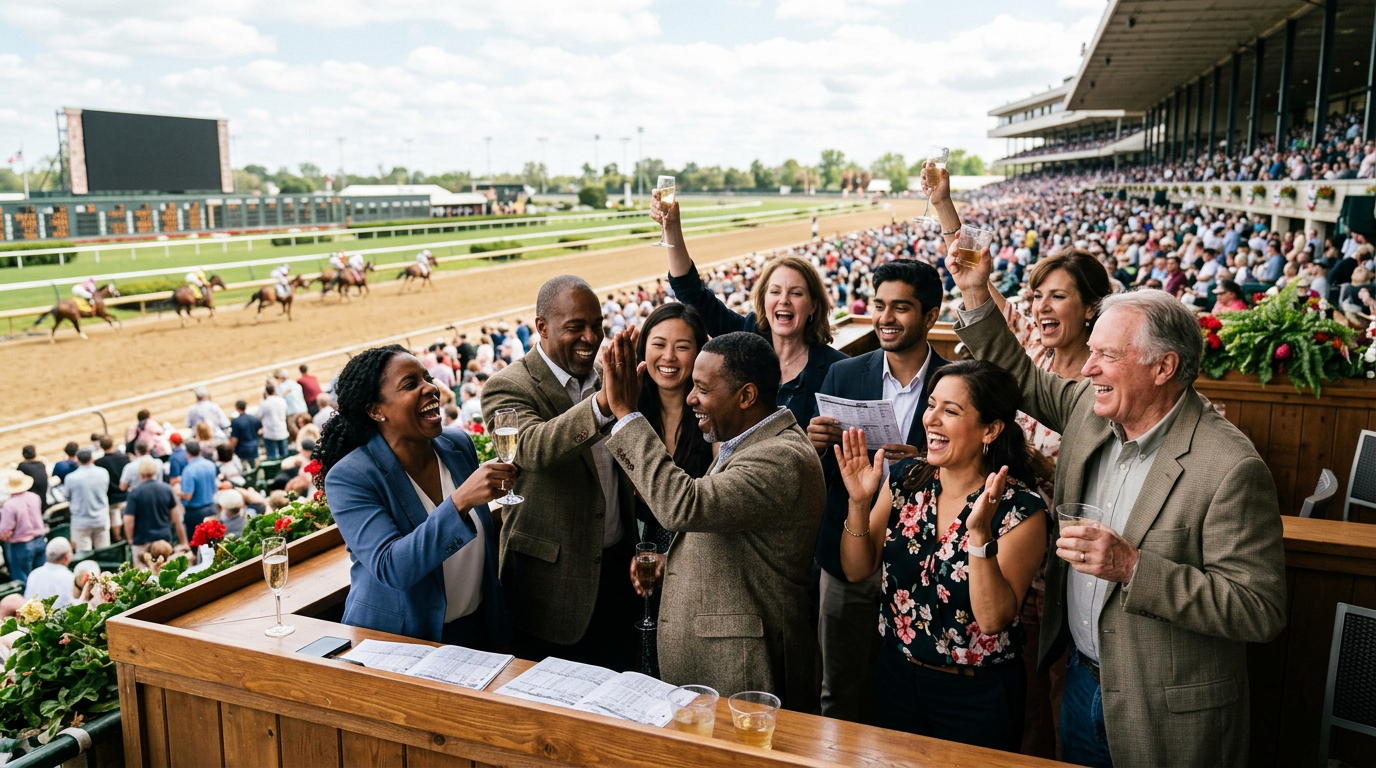
Your ownership structure should match your goals and budget. Microshare platforms like MyRacehorse and Commonwealth operate in all 50 states—they own the horses, you buy a fractional share ($65 to $300 or so) with no ongoing costs. You get updates, occasional stable access, and a sliver of purse earnings. Best for: casual fans who want the experience without the headaches. Partnership ownership (traditional syndicates, 5% to 25% shares) works best in states with strong stakes calendars and breeder incentives—Kentucky, New York, California, Florida. You’ll have more say and more exposure to losses and gains. Full ownership makes the most sense if you’re in Kentucky, Florida, or California year-round—you need access to top trainers, sales, and racing opportunities. Match your commitment level to the circuit’s intensity.
MyRacehorse gained fame when Authentic won the 2020 Kentucky Derby—5,314 microshare owners suddenly had bragging rights. Commonwealth’s Mage did the same in 2023 with 391 shareholders; payouts ran about $94 per share. These platforms handle licensing, training, vet bills, and management. You’re along for the ride. Traditional partnerships typically require an owner’s license, K-1s at tax time, and more hands-on involvement. They shine in states where breeder awards and purse enrichment multiply returns. Full ownership demands the most: you need a trainer, a racing plan, and ideally a base near a major circuit. Reddit and horse racing forums buzz with debates about microshare value—most investors don’t profit, but the experience has drawn thousands into the sport. Choose the model that fits your wallet and your desired level of involvement. Syndicates like WinStar’s Commonwealth partnership target serious runners; microshare platforms often buy at auctions and race in multiple states. Your “state” for microshares is less relevant—the platform decides where to run. For traditional and full ownership, geography is everything. A 10% share in a Kentucky-based horse racing at Churchill and Keeneland hits different than the same share in a horse stuck at a struggling track with thin purses. Match the strategy to the circuit, and the circuit to the strategy. Social media and owner communities add another layer. Facebook groups, Twitter threads, and forums like Thoroughbred OwnerView connect owners across states. Firsthand accounts from people who’ve raced in different regions can be invaluable. Visit tracks if you can. Walk the backstretch, talk to trainers and other owners. The vibe at Saratoga is different from Gulfstream; Del Mar feels different from Oaklawn. Your gut will tell you where you want to be.
The best state for you depends on whether you’re chasing purses, breeding awards, or just the thrill of the game. Kentucky and New York lead on prestige and incentives. Florida and California win on year-round action and weather. Pennsylvania and Louisiana punch above their weight on purse supplements. Do your homework, talk to locals, and remember—the horses don’t care about state lines. You should. The landscape evolves: slot revenues get renegotiated, breeder funds get trimmed or expanded, tracks close and open. Staying informed means subscribing to industry publications, following your state racing commission, and tapping into owner networks. The best state for you today might shift in five years. Flexibility—and a good trainer who can ship when it makes sense—keeps options open. Happy trails.
About the Author

Calvin Johnson is a Thoroughbred racehorse owner, day trader, and independent racing analyst with more than a decade of firsthand ownership experience. He has participated in nearly every common structure in horse racing — fractional platform shares, traditional syndicates, LLC partnerships, claiming ventures, and outright ownership — across more than two dozen horses. Calvin writes about racehorse ownership the same way he approaches markets: by studying risk, incentives, fees, and whether the people controlling the deal are aligned with the investors behind it.
- Calvin Johnsonhttps://racehorseownership101.com/author/calvin-johnson/

- Calvin Johnsonhttps://racehorseownership101.com/author/calvin-johnson/
- Calvin Johnsonhttps://racehorseownership101.com/author/calvin-johnson/

- Calvin Johnsonhttps://racehorseownership101.com/author/calvin-johnson/