
What Happens When A Race Horse Gets Injured?
Watching your horse go down or pull up lame is one of the worst moments in racing. Whether you own a microshare or a full stable, the seconds that follow can feel endless. Reddit threads and racing forums are full of stories from owners who got “that text” or “that call”—the one that changes everything. What happens next—who rushes onto the track, who makes the calls, and how the horse gets from crisis to recovery—varies by track, jurisdiction, and injury severity. Here’s a practical guide to the injury response chain, the decision-makers, and what owners and partners can expect when the unthinkable happens.
Racing’s best-kept open secret: you don’t have to just watch.
Ownership groups let regular people own a share of a real racehorse. The free guide explains how it works, in ten minutes.
Immediate On-Track Response and Veterinary Triage
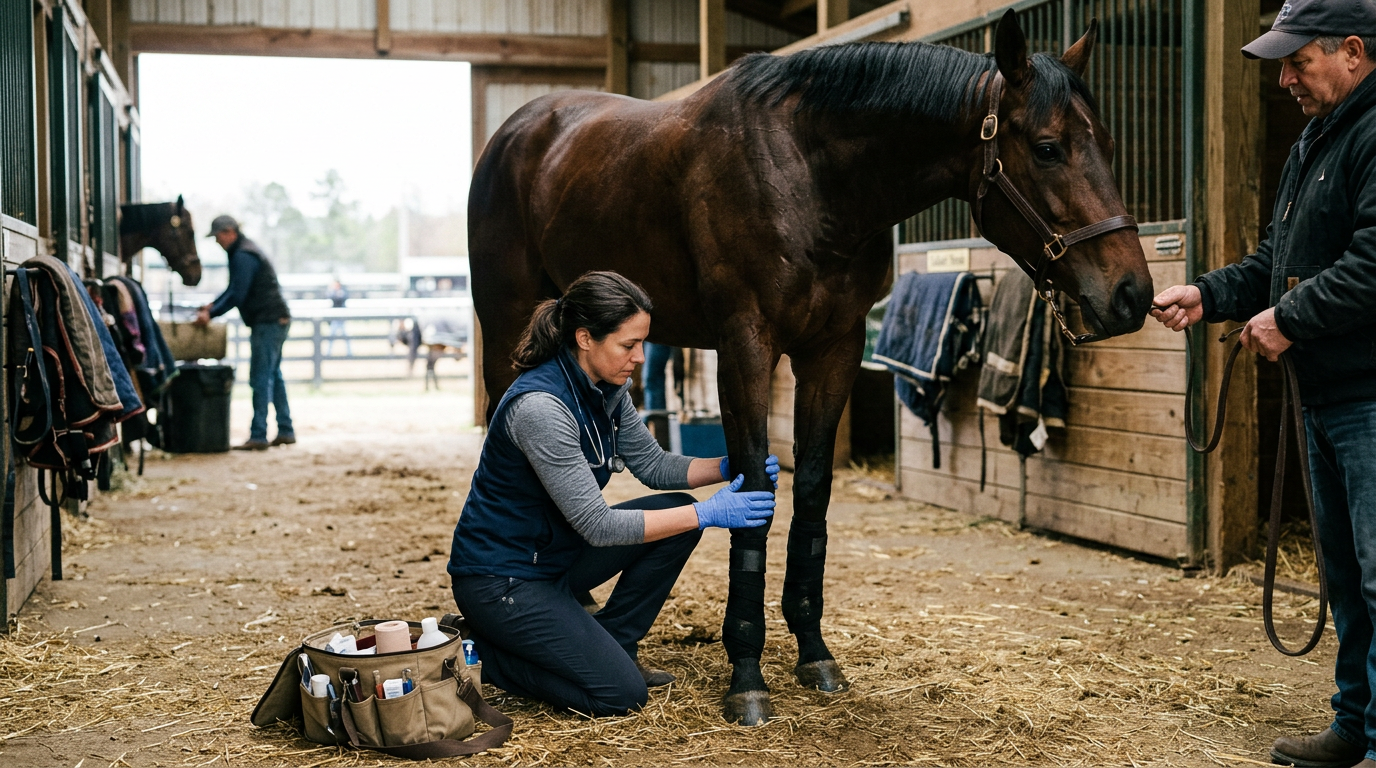
The moment a horse goes down or pulls up in distress, the track’s emergency protocol kicks in. Screens go up—portable panels carried by chase vehicles or stationed near the finish line—to shield the horse and veterinary team from the crowd and cameras. The AAEP’s Thoroughbred Race Day Injury Management Guidelines recommend a minimum of two veterinarians on duty for race days, with responsibilities covering the paddock, warm-up, starting gate, and post-race. Experienced handlers accompany vets to injuries. The goal: fastest response, quickest assessment, and best immediate care possible. For catastrophic injuries, every effort is made to load the horse into an equine ambulance before any decision about euthanasia. Triage happens on the spot—can the horse stand? Is the limb stable? Is transport feasible? The track vet’s judgment in those first minutes shapes what happens next. Screens in the paddock, near the finish, and in equine ambulances protect the horse and team from public view; chase vehicles with screens can respond anywhere on the track. The AAEP’s guidelines, published by the Racing Committee, emphasize that injured horses deserve the fastest and best care—and that humane euthanasia, when necessary, should follow every attempt to save or stabilize. Tracks are expected to hold meetings to review injury management plans and assign specific duties and locations to emergency personnel.
Who Makes Medical Decisions (Trainer, Vet, Owners, Syndicate Manager)
This one trips people up. When a horse is entered to race, owners and trainers implicitly consent to the track veterinarian’s authority over injury management during the event. The track vet—not the owner, trainer, or syndicate manager—has primary say in emergencies. That includes the power to treat on the spot and, when necessary, to humanely euthanize a horse deemed too severely injured to survive or move without undue suffering. California regulations and similar rules elsewhere spell this out: the track vet’s duty is to the horse’s welfare, not to financial interests. The horse’s private vet and owner may be consulted when possible, but the track vet’s judgment supersedes. After the acute crisis passes, decision-making shifts. The trainer typically coordinates with the owner’s vet for diagnostics, treatment plans, and rehabilitation. Syndicate managers relay information to partners and help coordinate vet visits and second opinions, but the owner (or managing partner) usually has final say on elective treatment and retirement. In one high-profile case, regulatory stewards scratched a horse based on the on-track vet’s assessment, but the owners and trainer weren’t immediately told why—a communication breakdown that sparked criticism. When in doubt, the track vet’s authority during the event is paramount; after the horse leaves the track, the owner’s vet and the trainer drive the plan. Know where the lines are drawn before you’re in the middle of a crisis.
Common Racehorse Injuries and Typical Severity Levels
Injuries range from minor setbacks to career-ending or life-threatening. Soft tissue problems dominate: suspensory ligament strains (mild cases often need 3–6 months rest; severe cases a year or more), superficial digital flexor tendon injuries (the classic “bowed tendon”), and splints from repetitive concussive force. Tendon injuries account for a significant share of racing injuries—recurrence rates after return to work can run 43–93%, which is why vets stress strict rehab protocols. Fractures run the gamut: carpal and fetlock chips from trauma, stress fractures of the tibia, cannon bone, and humerus from overuse. Condylar fractures, sesamoid injuries, and slab fractures of the carpus are more serious. HISA’s advisories on fatal proximal hindlimb fractures—tibial and pelvic—highlight the most devastating outcomes. Most of those occur during training, not racing; they’re often associated with horses who haven’t had sufficient high-speed work. The fetlock is a common site of catastrophic breakdown—the joint absorbs enormous force at speed. Sesamoid fractures can be managed in some cases; in others they’re career-ending. The carpus (knee) takes a beating; chip fractures are often removed arthroscopically with good results. Stress fractures of the cannon bone, tibia, and humerus develop from repetitive load—they’re the overuse injuries that catch horses in training. Early bone scanning or MRI can catch them before they become full fractures. The lesson: don’t ignore subtle lameness. It’s often the first signal of something bigger. Catastrophic fractures—often of the proximal limb—sometimes occur during high-speed work or racing and may require immediate euthanasia. Bone chips might be removed surgically with a good prognosis; displaced fractures can end a career or worse. The Retired Racehorse Project and similar resources break down implications for performance: some injuries allow a second career; others limit the horse to light work or retirement. Injuries are the second leading cause of death in racehorses—a stark reminder that prevention and early detection matter. The incidence of tendon and ligament problems in performance horses is estimated at 11–46%; racing intensity is a significant risk factor. Young horses with repetitive concussive stress are especially prone to splints. Early signs—mild swelling, heat, a subtle hitch in the stride—can escalate within weeks if ignored. Catch it early and you may avoid the worst.
Diagnostic Process: Imaging, Scans, and Specialist Referrals
Once the horse is stable, the diagnostic phase begins. Radiographs (X-rays) are the first step for suspected bone injuries. Ultrasound evaluates tendons and ligaments—thickening, fluid, fiber disruption. For deeper or complex cases, MRI and CT scans come into play. CT excels at bone detail; MRI better visualizes soft tissue. Research on fetlock pain in sports horses has shown that combined standing low-field MRI and fan-beam CT provide complementary diagnostic value—one modality might miss what the other catches. In young Thoroughbred yearlings, baseline MRI, CT, and radiographic findings in the fetlock have been studied to understand normal vs. abnormal. For an injured horse, the goal is to see what’s damaged, where, and how badly. Radiographs are cheap and fast; ultrasound is portable and good for tendons and ligaments. When those don’t answer the question, or when surgery is being considered, advanced imaging pays for itself by guiding the right treatment—or by ruling out surgery when it’s not needed. Standing CT units (like Asto’s Equina) let horses be scanned under sedation without general anesthesia—a big plus for stressed patients. The Equina is described as the world’s only true weight-bearing fan-beam CT for horses—it can image limbs vertically and head/neck horizontally while the horse stands. General anesthesia carries its own risks and recovery time; standing protocols reduce both. AnimalScan and similar providers offer equine MRI and CT; The Horse’s guide to understanding equine diagnostic imaging breaks down the basics for owners. CT tends to excel at bone; MRI at soft tissue—but both can provide overlapping information. Combined modalities, as in fetlock pain cases, give a fuller picture. The key is getting the horse to a facility that has the right equipment and experience. Not every clinic has standing CT; not every injury requires it. Your vet will recommend based on the suspected problem. Combined standing MRI and CT can provide comprehensive fetlock region assessment. Vets often need to localize the problem clinically before imaging, since most scanners capture specific regions, not the whole horse. Referral to an equine hospital for advanced imaging, surgery, or specialist review is common for serious injuries. Hagyard, Rood & Riddle, UF Ocala, and similar centers handle the complex stuff. Some facilities offer standing sedation for imaging; others require general anesthesia. The vet needs a working diagnosis or at least a region to target—whole-body scans aren’t practical for a 1,200-pound patient. Fetlock pain, for example, might warrant combined MRI and CT to see both bone and soft tissue. Research on non-lame yearlings has used these modalities to establish baseline anatomy; in injured horses, the same tools reveal the extent of damage. Don’t skip the diagnostics—guessing costs time and money and can worsen outcomes.
Treatment Options: Rest, Medication, Surgery, and Rehab
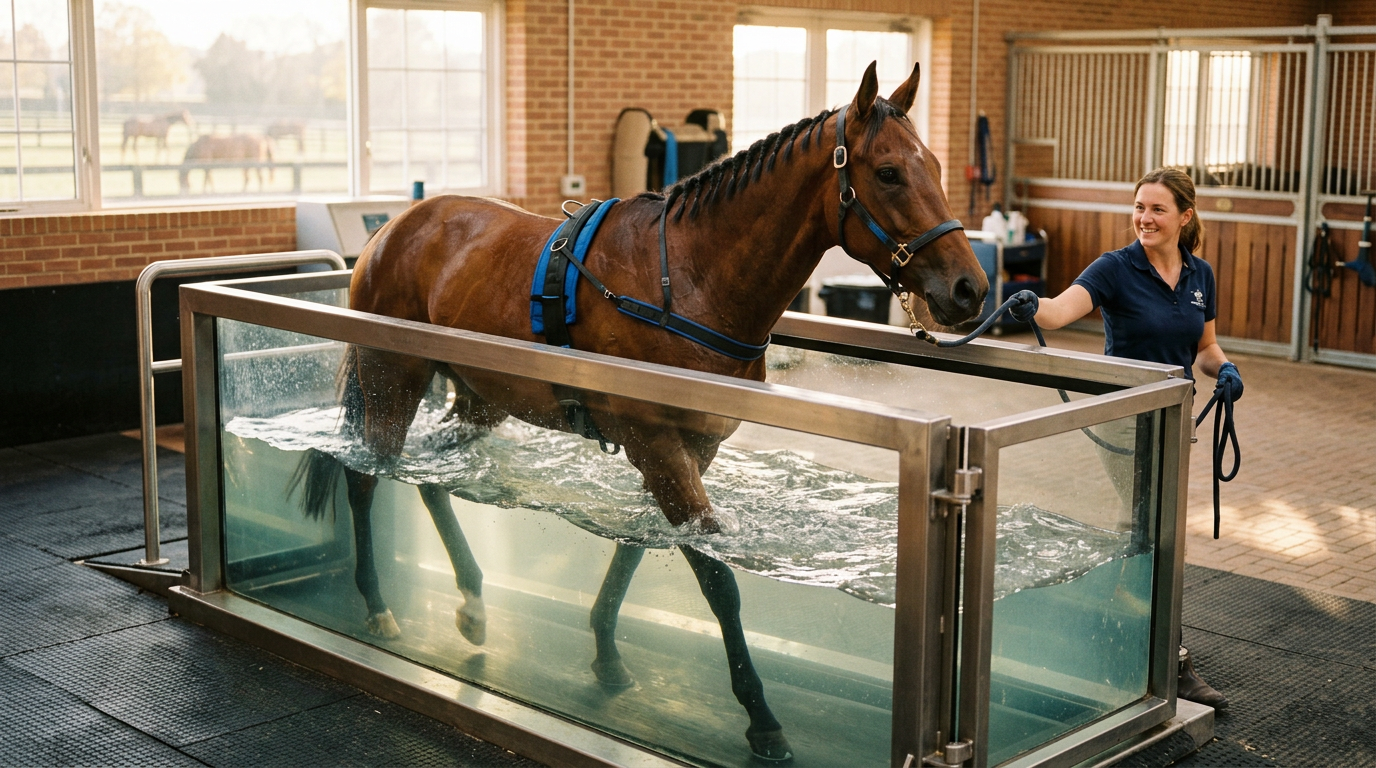
Treatment depends on injury type and career goals. Rest—stall rest, hand-walking, then controlled pasture—is the foundation for most soft tissue and many bone injuries. NSAIDs, cold therapy, and pressure bandaging manage acute inflammation. Intralesional injections of platelet-rich plasma (PRP) or mesenchymal stem cells (MSCs) are increasingly used for tendon and ligament injuries. Studies show MSC treatment can improve return-to-racing odds versus rehab alone; one trial on suspensory branch desmitis reported about 71% return to racing. Horses in that study received allogeneic stem cells at diagnosis, followed by 3–4 treatments with autologous bone marrow-derived MSCs. Horses with prior racing experience and males had better odds. For superficial digital flexor tendon injuries, a comparison of 213 racehorses found that autologous bone marrow MSCs significantly beat controlled exercise alone—roughly 3x higher odds of returning to racing and 2.6x higher odds of completing 5+ races post-injury. Adipose-derived stem cells, in that same study, didn’t show a significant edge. The message: not all stem cell sources are equal; protocol matters. PRP plus stem cells have been used successfully for third carpal bone slab fractures in Thoroughbreds—intra-articular PRP followed by MSCs in autologous plasma. Multiple injections over time, combined with controlled exercise, are the norm. Intralesional injection—putting the therapy straight into the lesion—can restore a more normal ultrasound appearance within about 30 days in some cases, but full structural healing takes much longer. Case reports in show jumpers describe repeated intralesional MSC and PRP for tendon healing with good outcomes. The technology keeps improving; stay in touch with a vet who follows the literature. Carpal slab fractures have been successfully treated with PRP plus stem cells. Surgery is indicated for displaced fractures, certain chips, and some soft tissue repairs. Rehabilitation protocols typically progress through phases: acute rest, controlled movement, walking, trotting, gradual return to speed work. Underwater treadmills, swimming, and vibration therapy support the process. Full healing takes months; tissue strength lags behind clinical improvement—a horse may appear sound before the tissue is truly ready. BloodHorse and similar industry outlets have covered the evolution of stem cell and PRP protocols; outcomes continue to improve but nothing replaces time and progressive loading. Intralesional therapy can normalize ultrasound appearance within about 30 days in some cases, but that doesn’t mean the horse is ready to race. The proliferative and remodeling phases take much longer. Adipose-derived stem cells, in at least one large study, didn’t outperform controlled rehab alone for tendon injuries—so the specific therapy matters. Work with a vet who stays current on the data.
Recovery Timelines by Injury Type
There’s no one-size-fits-all. Bowed tendons and suspensory injuries often need 6–12 months or more. Healing occurs in overlapping phases: inflammatory (0–2 weeks), proliferative (2 weeks to 2–3 months), and remodeling (3+ months to a year or more). Scar tissue is weaker than original tissue and prone to reinjury—hence the emphasis on gradual return. Bone chips removed arthroscopically might allow a return in several months. Stress fractures require extended rest and controlled reintroduction to work. Rich Strike, the 2022 Kentucky Derby winner, tore a ligament in 2023; his owner estimated only a 5–10% chance of return to racing. Timeline estimates from vets are just that—estimates. Ultrasounds and rechecks guide the actual pace. North Bridge Equine and similar rehab-focused practices publish recovery timelines by injury type—suspensory, tendon, fracture—but every case is different. The inflammatory phase brings hemorrhage and swelling; the proliferative phase builds new collagen that’s initially weak and disorganized; the remodeling phase strengthens tissue over many months. A horse that looks good at 90 days may still be in the middle of remodeling. Rushing back is the fastest way to reinjure. Dr. Barbara Parks and other equine vets stress that these tissues have limited blood supply and heal with scar that’s inherently weaker—careful, progressive rehab is non-negotiable. Cold therapy, NSAIDs, pressure bandaging, and early modalities (laser, shock wave, stem cells) support the acute phase; aqua treadmill and controlled exercise come later.
How Injury Impacts Race Schedules and Campaign Plans
A planned stakes campaign can evaporate overnight. Derby trails, Breeders’ Cup targets, and seasonal goals get put on hold or scrapped. Trainers and owners recalibrate: when can this horse possibly return, and is it worth it? Some injuries allow a comeback in time for a later target; others push everything back a year or more. Shipping plans, partnership expectations, and breeding or sale timelines get disrupted. Communication with partners and stakeholders becomes critical—no one wants to learn about a serious injury from the news. Honest updates, even when the news is bad, build trust. An Australian syndicate member described receiving a text with “devastating news” about their horse—the emotional whiplash of ownership. Campaign plans aren’t just calendar items; they drive cash flow, breeding decisions, and partnership morale. A horse laid up for a year affects everyone. Some owners use the downtime to reassess: is this horse worth the investment, or is it time to retire and rehome? The injury forces a conversation that might otherwise get deferred.
Financial Impact on Owners: Ongoing Costs During Layoff
An injured horse still eats, still needs board, and often needs vet care and rehab. Professional rehabilitation board runs around $125 per day or more at dedicated facilities—that’s thousands per month. Diagnostic workups, imaging, surgery, and medications add up quickly. One documented splint fracture case tallied $365 for initial diagnostics and over $3,500 for a few days of hospitalization. That was for a non-racing horse; racehorse cases can run higher when you add specialist consults, advanced imaging, and surgical options. Veterinary Rehabilitation Services of Virginia and similar facilities charge around $125 per day for professional rehab board—two modalities plus general care. Over six months, that’s over $22,000 before you add vet visits, medications, or imaging. The Rewards of Rehab, from the Retired Racehorse Project, outlines what goes into a successful rehab program—and what it costs. Syndicate members splitting that 10 ways still feel it; full owners bear the full load. Some partnerships build an emergency fund or reserve into the operating budget. Others learn the hard way. Plan for the worst; hope for the best. New Vocations reports an average rehab cost of about $3,500 per horse for those needing significant treatment. Syndicate members share these costs proportionally; full owners bear them alone. Insurance can offset some expenses, but deductibles and coverage limits apply. The financial hit during a long layoff is real—budget for it. Horse Racing Sense breaks down bowed tendon costs: acute stall rest, vet visits, ultrasound rechecks, and rehab board can run into five figures over 6–12 months. Conservative treatment (pasture rest) costs less but may not be appropriate for horses intended to return to racing—surgical or advanced treatment with professional rehab is often recommended for athletes. Mad Barn and similar resources outline phases for returning horses to work; each phase has associated costs. Syndicate agreements should spell out how unexpected expenses are shared—vet bills, surgery, extended board. Surprise costs strain relationships when they’re not anticipated.
Insurance Coverage: Mortality, Major Medical, and Loss of Use
Mortality insurance covers death from accident, illness, or humane destruction—typical for horses valued into the hundreds of thousands. Major medical and surgical coverage reimburses vet fees for treatment, diagnostics, and surgery, often with limits of $5,000–$10,000 per claim and deductibles. Colic surgery coverage may be included. Loss of use pays a percentage (often 50–60%) of insured value if the horse becomes permanently unable to perform its intended use—racing, in this case. The horse must be totally and permanently unable to race, not just limited. Loss of use usually requires a vet exam and sometimes x-rays; premiums often run 2.5–3.5% of mortality value. AmRisk, EQ Group, and similar insurers offer racehorse-specific products. Equine Insurance Center outlines coverage structures: mortality as the base, major medical and surgical as add-ons, loss of use for performance horses above a value threshold. American Equine Insurance Group and others publish sample terms—deductibles, limits, exclusions. Navicular, arthritis, and degenerative joint disease are sometimes automatically excluded on medical policies; read the fine print. Colic surgery coverage might be capped (e.g., $3,000 including aftercare). Some policies have no co-pays or continuing care time limits—others do. Shop around, and make sure your agent understands racing. A policy written for a pleasure horse may not fit a racehorse’s risk profile. Policies vary—read the fine print, especially exclusions for pre-existing conditions and treatment limits. Mortality coverage often includes a guaranteed extension—if a condition is reported during the policy period, coverage may automatically continue for up to 12 months after expiration. That can matter when an injury stretches past renewal. Star H Insurance and other providers explain loss of use in detail: the horse must be totally and permanently unable to race, not merely slower or limited. A horse that can jog but not race probably doesn’t qualify. Veterinary exams, including x-rays, are typically required for loss of use underwriting. Premiums on a $100,000 horse might run $2,500–$3,500 annually for that coverage alone. Weigh the cost against your risk tolerance.
Syndicate Communication: What Partners Should Expect

Syndicate managers have a duty to keep partners informed. Real-world examples: BG Racing and McGoldrick Racing publish written updates when horses are injured, including vet findings, recovery plans, and timelines. When Romeo Brown suffered a stress fracture, his syndicate manager provided a detailed assessment and apologized for delayed communication (he’d been hospitalized himself). Transparency matters: honest severity assessments, what the vet said, what the options are, and when the next update will come. Partners should expect access to visit the horse when appropriate and regular email or web updates. Red flags: radio silence, vague assurances, or learning about a serious injury from external sources. Good syndicates treat communication as core to the partnership. The Sydney Morning Herald piece on “the joys and shattering lows” of microshare ownership captured the emotional roller coaster—a single text can upend your day. McGoldrick’s updates on Romeo Brown showed the right approach: acknowledge the delay if there was one, explain the injury and assessment, outline the recovery plan, and set expectations for the next update. Partners who feel informed are more likely to stick through a long rehab. Those left in the dark may sour on the experience. Transparency doesn’t mean oversharing every vet bill, but it does mean timely, honest summaries of what’s going on and what the options are. Visit days, when the horse is stable enough, help—seeing the horse in person reassures many partners.
When a Horse Returns to Training (and Return-to-Race Criteria)
There’s no universal checklist, but common criteria include: resolution of lameness at walk, trot, and canter; satisfactory ultrasound or imaging showing healed or stabilized tissue; completion of a graduated exercise program; and clearance from the treating vet. Many trainers incorporate a few slow works before ramping up. Mad Barn’s guide on returning horses to work emphasizes ensuring a successful comeback—not just from injury but from the off-season. The principles are similar: rebuild fitness gradually, respect the tissues, don’t overload too soon. SecondVet and similar resources outline the typical phases: rest, hand-walking, turnout, light riding or jogging, then faster work. For racehorses, the progression might include ponying, swimming, or mechanical walkers before the horse ever sees the track again. Some trainers use “tighteners”—short, controlled works—before a first race back. The “second off the layoff” betting angle exists because first starts are often rusty. Give the horse time to acclimate. Ask the vet to clear the horse in writing before resuming speed work. A signed release protects you if something goes wrong—and it ensures everyone’s on the same page about readiness. The “second off the layoff” angle that bettors talk about exists for a reason—horses coming back from injury often need a race or two to find their legs. Rushing a horse back increases reinjury risk. HISA advisories have noted that horses with limited high-speed work—including those returning from layoff—are at elevated risk for certain fractures. Patience pays. Equine Footing Science and UC Davis research emphasize that injuries often stem from overuse—too much speed work, too many load cycles, inadequate recovery. Returning too soon repeats the mistake. The Grayson-Jockey Club white paper on racing surfaces and the RSTL’s work with HISA have raised the bar on track consistency; daily testing and pre-meet inspections help. But the horse’s individual readiness matters as much as the surface. Some trainers incorporate “fitness races”—lower-stakes outings to blow out the cobwebs—before targeting bigger events. The betting angle “second off the layoff” exists because first starts back are often tune-ups. Give the horse the runway he needs.
When Retirement Is the Best Option
Sometimes the numbers don’t add up. The injury is too severe, the prognosis too guarded, or the horse has given all he has. Rich Strike’s owner faced that call. Retirement may be elective (the horse could possibly race again but it’s not worth the risk) or mandatory (the horse cannot safely return). Factors: age, residual value as a breeding or riding prospect, cost of ongoing rehab, and the horse’s long-term welfare. Syndicate agreements often specify how retirement decisions are made—majority vote, managing partner decision, or vet recommendation. The goal is a decision that respects the horse and the investors. BloodHorse’s coverage of Rich Strike’s injury laid out the math: initial odds of return were 20–25%, then dropped to 5–10% after further evaluation. At some point, continuing to rehab for a slim chance doesn’t serve anyone—the horse, the owner, or the partnership. Retirement to stud, if the horse has pedigree and success, can preserve value. Retirement to a second career or adoption is another path. The key is making the call before the horse suffers or the costs spiral. Veterinary input is critical; so is gut instinct. If the vet says “we can try” but the odds are long, the owner has to weigh hope against reality. There’s no shame in retiring a horse who’s given his all. There is shame in pushing one past his limits for marginal returns.
Second Careers and Rehoming Paths After Injury
Many injured racehorses transition successfully to second careers. New Vocations, CANTER, and similar programs specialize in rehabilitating and rehoming retired racehorses—including those with significant injury histories. Over 75% of horses entering New Vocations have injuries; the organization has placed thousands into adoption. London House had a knee chip removed before rehab and rehoming; D’Vinicris recovered from two displaced pastern fractures and found an adoptive home. Adoption contracts typically bar return to racing or auction. The Thoroughbred Aftercare Alliance accredits programs that meet welfare standards. Planning for aftercare before a crisis makes the handoff smoother. Paulick Report’s story on D’Vinicris—”letting Vinny choose his path” after two displaced pastern fractures—shows what’s possible with skilled rehab and patience. New Vocations’ Lexington facility at Mereworth Farm, their flagship, handles everything from minor soreness to major fractures. Adoption contracts prevent horses from returning to racing or auction; the program offers lifetime return policies and first-year monitoring. The average rehab cost per horse is around $3,500, funded by donations—so the adopting organization absorbs a lot of the burden. CANTER’s affiliate model places horses through local chapters near tracks. The Thoroughbred Aftercare Alliance accredits programs that meet welfare standards. If you’re buying or breeding, factor aftercare into the plan. When the time comes, having a relationship with a program speeds the process. Breeders’ Cup and other majors now require horses to be registered with accredited aftercare—the industry is moving toward making it standard, not optional.
Legal/Regulatory Requirements for Reporting Serious Injuries
HISA requires regulatory veterinarians at covered tracks to report fatal injuries. In recent years, HISA has collected data on fatal proximal hindlimb fractures (tibial and pelvic), with most occurring during training. The Responsible Person—typically the trainer—must maintain records of all medical and therapeutic treatments for covered horses, whether at the track, farm, or clinic. HISA uses this data to issue Equine Health Advisories identifying risk factors and prevention strategies. State racing commissions may have additional reporting rules. Serious injuries that affect licensing, medication violations, or equine welfare can trigger investigations. California’s racing vet regulations spell out duties at the track; other jurisdictions have analogous rules. The trend is toward more transparency and data collection—HISA represents a federal layer that didn’t exist a few years ago. Fatal injuries get the most attention, but non-fatal serious injuries may also need documentation for insurance, medication compliance, or follow-up care. When a horse is vanned off or requires emergency treatment, the incident is usually logged. Trainers and vets should keep their own records in parallel—treatment logs, imaging reports, and vet invoices. If a dispute arises or an insurance claim is filed, documentation is everything. Compliance isn’t optional. HISA’s Attending Veterinarian Handbook outlines the Responsible Person’s duties: medical, therapeutic, and surgical treatment records must be maintained for every covered horse, regardless of location. The data feeds into injury surveillance and prevention. HISA’s 2024–2025 advisory on fatal proximal hindlimb fractures noted that roughly 40% of affected horses had limited high-speed exercise history—pointing to conditioning and workload as risk factors. Regulatory vets report through the HISA Portal; trainers and vets access the same system. State commissions may have additional requirements—medication reporting, necropsy protocols, or incident documentation. Ignoring reporting obligations can lead to fines, suspension, or worse. When in doubt, document everything and file what’s required. The paper trail protects you and the horse.
How to Reduce Injury Risk Through Training, Surfaces, and Management
Prevention starts with surfaces. Consistency is key—horses adapt to specific conditions; sudden changes increase stress and injury risk. Too-hard surfaces risk bone injury; too-soft surfaces stress tendons and ligaments. The Racing Surfaces Testing Laboratory’s Orono Biomechanical Surface Tester mimics limb impact at full gallop; HISA’s phased approach (design, pre-meet inspection, daily testing) is rolling out at tracks nationwide. Beyond surfaces: training load matters. Overuse—excessive speed, too many high-speed works, inadequate recovery—drives cumulative damage. Gradual conditioning, appropriate rest, and monitoring for early warning signs (mild lameness, heat, swelling) can catch problems before they become catastrophic. HISA’s advisories on proximal limb fractures highlight that horses with limited high-speed history are at higher risk—underscoring the need for proper conditioning when starting or returning from layoff. PMC research on track surfaces and ridden workouts outlines alternatives to high-intensity exercise: swimming, ponying, mechanical walkers. Varying the training stimulus can reduce repetitive stress while maintaining fitness. Early detection matters as much as prevention—minor heat, swelling, or gait changes warrant a vet look before they become major. The Equine Management article on the Derby accident and track safety reinforced that surface consistency, veterinary oversight, and emergency preparedness all play a role. DVM360 and similar outlets have covered the evolution of track safety post-2021; the industry is paying attention. As an owner, ask your trainer about surface conditions, workload, and how they monitor for warning signs. Proactive management beats reactive crisis every time. The Retired Racehorse Project’s guide to track surfaces for racehorse safety emphasizes that modern tracks use drainage systems and layered materials to cushion impact—but consistency day-to-day and across the track surface is critical. Horses’ musculoskeletal systems adapt to specific conditions; variation increases stress. The Grayson-Jockey Club white paper on racing surfaces and UC Davis Equine Footing Science research support the same principles: manage load, monitor surfaces, and build fitness progressively. There’s no way to eliminate risk entirely—racing is a high-speed, high-stakes sport. But informed owners and trainers can stack the odds in the horse’s favor.
No owner wants to face an injury. When it happens, knowing the chain of response, who calls the shots, and what to expect from diagnostics through recovery—or retirement—helps. Stay informed, communicate openly with partners, and put the horse’s welfare first. The rest follows from there. No guide can eliminate the gut punch of an injury—but knowing the system, the decision-makers, and the paths forward can make a chaotic moment slightly less overwhelming. Stay in touch with your vet, your trainer, and your partners. Put the horse first. And if you’re in a syndicate, hold your manager to a high standard on communication. When it all works, the horse gets the care he needs and the owners stay informed. That’s the goal—every time. Equine Info Exchange and similar sites have profiled the rehabilitation process at New Vocations—horses arriving with everything from minor soreness to fractures requiring surgery, then progressing through rehab and into adoption. London House’s story—bone chip removed, rehab completed, new career found—illustrates the arc. The industry is getting better at injury prevention, diagnosis, and aftercare. HISA’s data collection, surface testing, and advisories are part of that. So is the growth of accredited aftercare programs. As an owner, you’re part of the system. Stay informed, communicate, and when the worst happens, lean on the professionals. They’ve seen it before. They’ll guide you through.
About the Author

Calvin Johnson is a Thoroughbred racehorse owner, day trader, and independent racing analyst with more than a decade of firsthand ownership experience. He has participated in nearly every common structure in horse racing — fractional platform shares, traditional syndicates, LLC partnerships, claiming ventures, and outright ownership — across more than two dozen horses. Calvin writes about racehorse ownership the same way he approaches markets: by studying risk, incentives, fees, and whether the people controlling the deal are aligned with the investors behind it.
- Calvin Johnsonhttps://racehorseownership101.com/author/calvin-johnson/

- Calvin Johnsonhttps://racehorseownership101.com/author/calvin-johnson/

- Calvin Johnsonhttps://racehorseownership101.com/author/calvin-johnson/

- Calvin Johnsonhttps://racehorseownership101.com/author/calvin-johnson/