Gelded means a male Thoroughbred has been castrated — surgically altered so he cannot breed. On a race program or sale page the letter “g” marks a gelding. For a buyer, the economic consequence is direct: a gelding has no stallion value, so his entire worth depends on what he earns on the track (and any resale as a runner), not on a breeding career.
The first time most people see “gelded” on a horse they are thinking of buying into, they read it as bad news — as if the horse were not good enough to keep intact for the breeding shed. That reaction is common, and mostly wrong about ability. Gelding tells you very little about how fast a horse is; it tells you a great deal about the economics of the share you are being offered. (If you are still early in due diligence, our guide to how racehorses get their names covers another buyer checkpoint.)
The short version
- A gelding is a male horse that has been castrated. On charts and sale pages it shows up as the letter “g”.
- Gelding is mostly a behavior and management decision, not a verdict on ability. Some of the best horses in American history were geldings.
- The real consequence for a buyer is economic: a gelding has no breeding value, so his entire worth lives on the racetrack.
Table of contents
- What “gelded” means on a racehorse’s page
- Why trainers geld racehorses
- Does gelding actually change how a horse runs?
- What gelding means for your ownership economics
- When a horse gets gelded — and what the timing tells you
- Famous geldings worth knowing
- Questions to ask before you buy into a gelding
- Common questions about geldings in racing
What “gelded” means on a racehorse’s page
A gelding is a male horse that has been castrated, which permanently removes his ability to breed. In Thoroughbred racing you’ll see it written as the letter “g” beside a horse’s age. A “4g” on a chart or sale page is a four-year-old gelding, the same way “c” marks a colt and “f” marks a filly. The procedure is a routine veterinary castration, usually done before or early in a racing career. It changes nothing about how the horse is entered, trained, or made eligible: geldings run in maiden races, allowance races, claiming races, and stakes, up to and including the Kentucky Derby. What it does change is the horse’s future off the track. An intact male can earn stud fees if he succeeds; a gelding cannot. For a buyer, that single fact is the heart of what “gelded” signals.
Racing’s best-kept open secret: you don’t have to just watch.
Ownership groups let regular people own a share of a real racehorse. The free guide explains how it works, in ten minutes.
Racing programs and past performances compress a horse’s sex and age into a single letter, so once you know the code you can read any field at a glance. The conventions are standard across US racing — Daily Racing Form publishes the full list of past-performance symbols.
How a horse’s sex shows up on a chart
| Code | What it means |
|---|---|
| c | Colt — an intact male under five |
| f | Filly — a female under five |
| g | Gelding — a castrated male |
| h | Horse — an intact male, five and older |
| m | Mare — a female, five and older |
| r | Ridgling — a male with an undescended testicle |
Why trainers geld racehorses
Gelding is usually a management decision, and a rational one. A colt that’s distracted by other horses, hard to handle, or spending his energy on everything except running is a colt that isn’t earning. Removing that drive tends to settle the horse: he eats better, trains more consistently, and keeps his mind on the job.
The second reason is economic from the start. Most male racehorses are never going to be stallions — stud careers are reserved for a small number of well-bred, high-performing colts. For everyone else the breeding option is theoretical, so there’s little reason to keep an unruly colt intact on the chance he becomes the exception. The castration itself is a routine veterinary procedure. The decision behind it is about getting the most racing out of the horse in front of you.
Does gelding actually change how a horse runs?
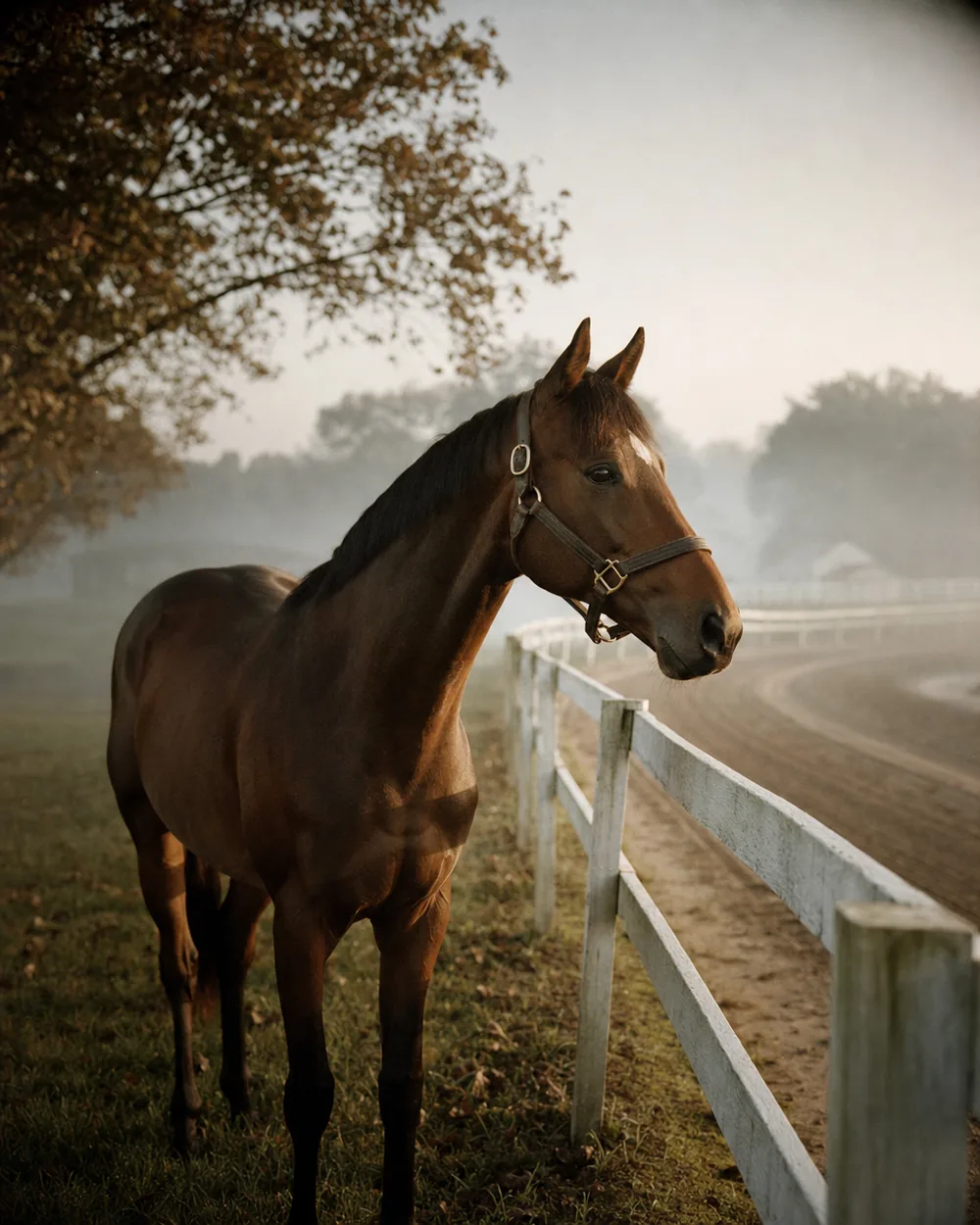
Sometimes, and not in the way people assume. Gelding is not a speed switch, and it won’t make a slow horse fast. What it can do is let a talented but distracted colt show the ability he already had — the improvement you sometimes see after gelding is focus, not new horsepower. Plenty of horses run exactly the same before and after. So when a seller frames a recent gelding as an upgrade, treat it as a reasonable hope, not a promise.
Gelding is a behavior decision far more than a speed decision.
What gelding means for your ownership economics
This is the part that actually affects your wallet, and it’s where most explainers go quiet. A gelding can never stand at stud, so he will never produce a breeding windfall — no stallion fee, no residual breeding rights, no second act in the breeding shed. His value is what he earns on the track plus whatever a future racing or competition buyer will pay for him as a runner. That’s the whole of it.
For most horses, the breeding upside you’re “losing” was never going to arrive in the first place.
Before you treat that as a loss, do the math the industry rarely spells out. Only a small fraction of intact colts ever earn a stud career; the breeding shed is open to a narrow, well-bred slice of each foal crop registered with the Jockey Club. For the overwhelming majority of males, that breeding upside was never going to arrive. So for most buyers the “lost” stud value is a premium you’d be paying for a lottery ticket you were unlikely to cash.
Geldings come with real advantages in return. They tend to stay sound and race longer, which is good for racing returns even as it means you keep paying to keep one in training. They’re straightforward to campaign, and they’re often priced honestly because nobody is selling you breeding hope on top of racing ability. If you want the sex-status question framed around your money rather than biology, our breakdown of colt vs. filly ownership runs the same logic across the other fork.
Intact colt vs. gelding: what changes for a buyer
| For the buyer | Intact colt | Gelding |
|---|---|---|
| Breeding / stud upside | Possible, but only for a tiny top tier | None, permanently |
| Resale market | Racing buyers, plus potential breeders | Racing and competition buyers only |
| On-track temperament | Can be distracted or studdish | Usually calmer and more consistent |
| Typical career length | Often retired early if stud value appears | Frequently races on for years |
| What you’re paying for | Racing ability plus breeding hope | Racing ability only |

When a horse gets gelded — and what the timing tells you
Timing is a quiet tell. A horse gelded young — as a yearling or early two-year-old — was usually never a stallion prospect, and his connections decided early to manage him as a racehorse and nothing else. A horse gelded later, after he’d already raced, points to a different story: a decision to commit fully to the track, sometimes because temperament got in the way, sometimes because an early hope of a stud career faded.
Neither is a red flag on its own. But the question is worth asking the seller: when was he gelded, and why? The answer tells you whether you’re buying a horse who was always going to be a racing-only proposition, or one whose connections recently closed the door on a breeding future. That context belongs in your valuation.
Famous geldings worth knowing
If gelding capped a horse’s ceiling, the record book would say so. It doesn’t. Some of the most celebrated horses in American racing were geldings, in part because they stayed sound and raced for years instead of being hurried off to stud.
Geldings who defined eras
| Horse | Why he matters |
|---|---|
| Funny Cide | First gelding to win both the Kentucky Derby and the Preakness (2003) |
| Kelso | Five-time Horse of the Year (1960–1964) |
| John Henry | Two-time Horse of the Year; earned more than $6.5 million on dirt and turf |
| Forego | Three-time Horse of the Year and a weight-carrying icon of the 1970s |
| Exterminator | 1918 Kentucky Derby winner and one of racing’s earliest gelding heroes |
Funny Cide’s 2003 run is the cleanest answer to the “gelded means second-rate” instinct: a New York-bred gelding who took the first two legs of the Triple Crown before finishing third in the Belmont (NPR covered the phenomenon at the time).
Questions to ask before you buy into a gelding
None of this means avoid geldings. It means price them correctly. Before you put money into a share, get clear answers to these:
- When and why was he gelded? Early management, or a recent change of plan?
- Does the asking price reflect racing-only value, or are you being charged as if breeding upside still exists?
- What’s the campaign plan, and does it lean on a gelding’s usual strength — durability and a long, consistent career?
- What’s the post-racing plan? A gelding has no breeding retirement, so the aftercare question is real from day one. Our owner’s guide to OTTB aftercare covers what good answers look like.
- How do the share economics compare with an intact colt in the same barn — see our stallion vs gelding comparison for buyers, and is the difference justified?
What does “you will be gelded” mean?
“You will be gelded” is slang for being cut out of breeding upside — a joke or jab that borrows the racing term for castrating a male horse. In the barn, a horse that is gelded can never stand at stud; in the meme, the phrase means someone is being stripped of status, future leverage, or the option they thought they still had.
Owners hear the line because gelding is one of the most consequential decisions on a young colt: once it is done, the breeding residual is gone and the horse is a racehorse only. That is why the phrase travels outside the track — it compresses a permanent trade-off into four words. If you are evaluating a share marked “g” or reading chatter about a colt that “got cut,” the underlying question is the same as the joke: what future did connections just close off, and was racing the better remaining path?
Common questions about geldings in racing
Can a gelding run in the Kentucky Derby or the Triple Crown?
Yes. Geldings are eligible for all three Triple Crown races. Funny Cide won the Kentucky Derby and the Preakness as a gelding in 2003 before finishing third in the Belmont Stakes.
Can a gelded horse ever be bred?
No. Castration is permanent and removes the ability to breed. That’s why a gelding’s value is entirely about racing rather than the breeding shed.
Are most racehorses geldings?
No single sex dominates a race program — you’ll see colts, fillies, geldings, horses, and mares in the same field. Gelding is common among males who aren’t realistic stallion prospects, which is most of them.
Do geldings make good ownership entries?
Often, yes. You give up a breeding lottery ticket you were unlikely to cash, and in exchange you usually get a sounder, longer-racing horse priced on what he can actually do. For a first-time owner, that’s frequently the better trade.
A gelding isn’t a discounted horse or a damaged one. He’s a horse whose entire value lives on the track, which, for most owners, is exactly where any return was ever going to come from. Read the “g” for what it is: not a warning, but a fact about where the money can and can’t go.
About the Author

Calvin Johnson is a Thoroughbred racehorse owner, day trader, and independent racing analyst with more than a decade of firsthand ownership experience. He has participated in nearly every common structure in horse racing — fractional platform shares, traditional syndicates, LLC partnerships, claiming ventures, and outright ownership — across more than two dozen horses. Calvin writes about racehorse ownership the same way he approaches markets: by studying risk, incentives, fees, and whether the people controlling the deal are aligned with the investors behind it.
- Calvin Johnsonhttps://racehorseownership101.com/author/calvin-johnson/

- Calvin Johnsonhttps://racehorseownership101.com/author/calvin-johnson/

- Calvin Johnsonhttps://racehorseownership101.com/author/calvin-johnson/

- Calvin Johnsonhttps://racehorseownership101.com/author/calvin-johnson/
