A proud cut horse — or proud cut gelding — is the old racing label for a castrated male that still acts studdish: mounting, calling to mares, getting territorial in the shedrow. The traditional claim is that leftover tissue from an incomplete castration keeps the stallion behavior running; veterinary medicine took that claim apart decades ago.
nWhat remains is a narrower buyer question most sale pages never raise: is this horse a true gelding with learned habits, or does he still have hormone-producing tissue? That one phrase can reframe a horse from “manageable” to “damaged goods,” or talk you into shrugging off behavior you should have questioned.
nThe honest answer
- “Proud cut” traditionally blames leftover epididymis tissue for the behavior. That part is a myth: the epididymis produces no testosterone.
- When a gelding genuinely acts like a stallion, the real cause is far more often a missed (retained) testicle or learned behavior than leftover tissue.
- The buyer’s move is a pre-purchase exam and, if behavior is the worry, a simple blood test — not walking away on a rumor, and not waving it off because the seller did.
Table of contents
- Proud cut gelding: the 30-second buyer’s version
- Why “proud cut” is mostly a myth
- Behavioral red flags to watch before you buy
- What to ask the vet before you wire funds
- Proud cut vs a clean gelding: does it change your purchase math?
- Racing and training implications
- Frequently asked questions
Proud cut gelding: the 30-second buyer’s version
A proud cut gelding is a castrated male horse that still shows stallion-like behavior — studdish posturing, mounting, aggression, or persistent interest in mares. The traditional meaning is literal: that a surgeon left part of the reproductive tract behind during gelding (usually the epididymis, the coiled tube beside the testicle) and that the remnant keeps making male hormone. Veterinary research has shown this is mistaken, because the epididymis itself produces no testosterone. When a gelding genuinely behaves like a stallion, the usual causes are a testicle that was never removed — a retained or undescended testicle, called cryptorchidism — or learned behavior that outlasts the surgery. True leftover hormone-producing tissue is uncommon. For a buyer, the phrase is not a diagnosis. It is a prompt to ask for a veterinary exam, and where it matters a blood test, before money changes hands.
The Sport of Kings has a side entrance. Here’s the key.
Regular people own racehorses — together, in partnerships — and stand in the paddock like they were born there. The free guide shows you the way in.
Why “proud cut” is mostly a myth (and what’s actually going on)
Start with the biology the old term gets wrong. The epididymis stores and transports sperm; it does not manufacture testosterone. Testosterone comes from the testicles. So if both testicles are removed — a correct gelding — there is no hormone source left, no matter what other tissue stays behind. The American Quarter Horse Association puts it plainly in its own explainer that leaving the epididymis does not cause continued stallion behavior, and equine vets have understood this for decades.
So why do some geldings still act like stallions? Two real reasons, and both matter more to a buyer than the myth does.
The first is a retained testicle. If a horse was a cryptorchid — one testicle never dropped into the scrotum — and only the visible one was removed, he was never fully gelded. The hidden testicle, often tucked up in the abdomen, keeps producing testosterone. This is the genuine “incomplete castration” worth caring about, and it is a different animal from a clean gelding.
The second is learned behavior. A horse gelded later in life, after he has bred or settled into stallion habits, can keep the behavior with no hormones left at all. As one veterinary reference on stallion-like behavior in geldings notes, you can remove the hormones but not the memory or the instinct.
Here is the part that should steady a nervous buyer: the hormonal version is rare. A 2024 study in the Journal of Equine Veterinary Science examined more than 1,200 geldings flagged for stallion-like behavior and found the large majority had testosterone in the normal gelding range — only a small minority showed the elevated hormones that point to leftover testicular tissue. Most “proud cut” horses, in other words, aren’t.
Behavioral red flags to watch before you buy
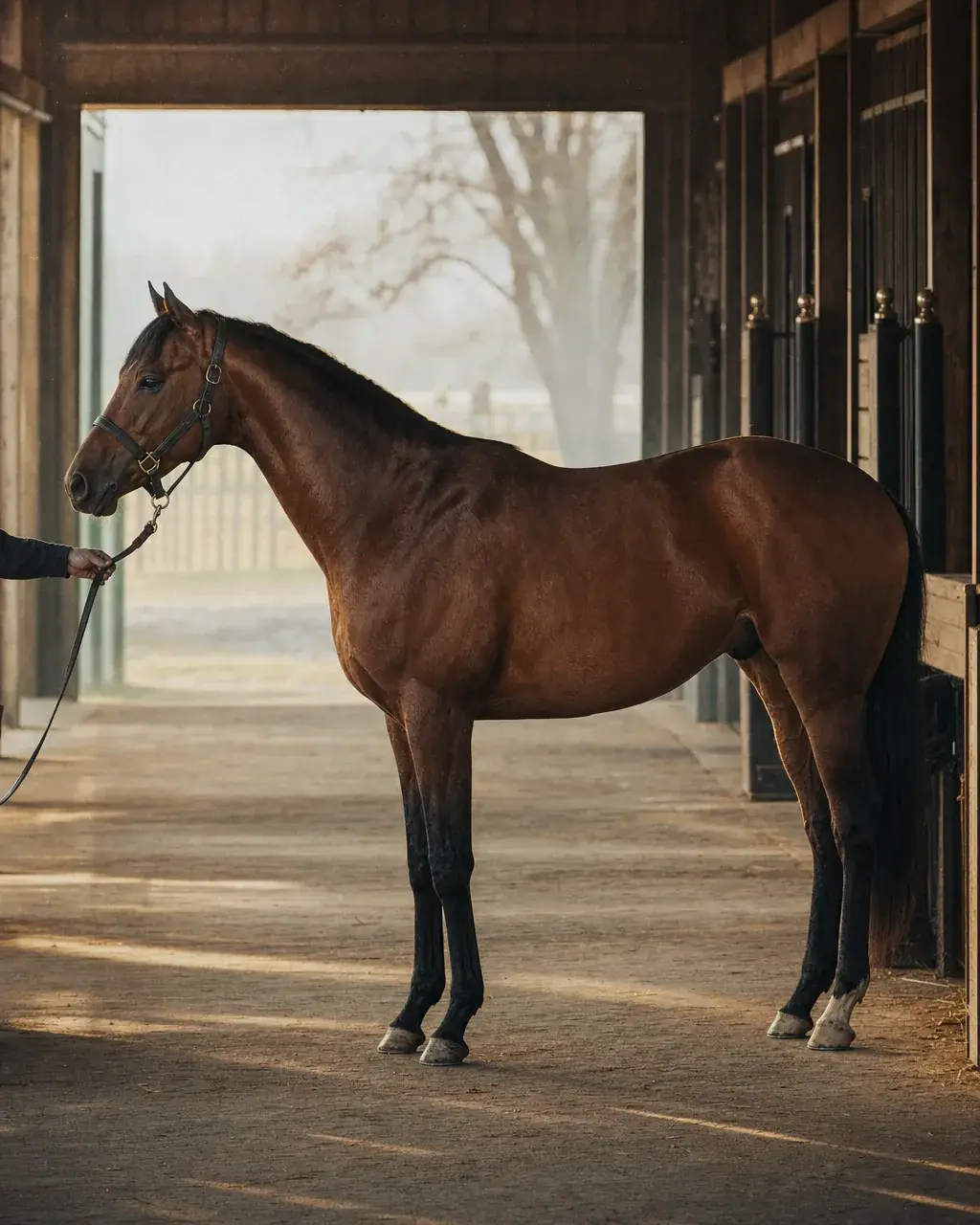
Behavior is where most buyers first meet this question — in a sale video, a barn visit, or a throwaway line on a listing. You are not diagnosing anything from the aisle. You are deciding whether to dig further. Watch the horse, then watch how the seller talks about him. The same behavior can be a hormone problem or a handling habit, and the difference is worth a blood test, not a guess.
Proud-cut red flags vs ordinary gelding behavior
| What you observe | More concerning when… | Usually just behavior or management when… |
|---|---|---|
| Mounting or herding mares | It’s frequent and paired with full arousal and flehmen (lip-curling) | It’s occasional posturing, common among geldings in a group |
| Loud, persistent calling | It’s aimed at mares and hard to interrupt | It’s general barn chatter that settles quickly |
| Aggression toward horses or people | It sharpens near mares and follows a stallion pattern | It’s consistent year-round and tracks to pain or handling |
| Heavy crest or “stally” look | It developed or stayed after gelding | The horse was gelded older and his build has been stable since |
| Seasonal intensity | Behavior spikes in spring like an intact horse | There’s no seasonal pattern at all |
What to ask the vet before you wire funds
This is the part casual sellers rarely volunteer, and it is exactly where an independent buyer protects themselves. A pre-purchase exam — the “vetting” — is standard for any serious racehorse purchase. A proud-cut concern just adds a few specific questions to it. None of these are confrontational. They are the questions a careful owner asks as a matter of routine, and the answers tell you whether you are looking at a health question or a training one.
Vet questions for a suspected proud-cut gelding — and the answers that should worry you
| Ask the vet or seller | A reassuring answer | An answer that warrants more work |
|---|---|---|
| Was this horse a cryptorchid? Were both testicles confirmed removed? | Surgical records confirm two testicles removed | “Not sure,” only one was found, or no records exist |
| Has a baseline testosterone test been run? | Testosterone sits in the normal gelding range | Never tested, with behavior ongoing |
| If testosterone is borderline, was an hCG stimulation or AMH test done? | An anti-Müllerian hormone or hCG test confirms no functional tissue | A borderline result with no follow-up test |
| When was he gelded, and at what age? | Gelded young, before stallion habits formed | Gelded late, after racing or breeding as an intact horse |
| Does the behavior affect training or safety now? | Manageable; the trainer confirms it day to day | It disrupts the barn or makes him unsafe to handle |
Proud cut vs a clean gelding: does it change your purchase math?
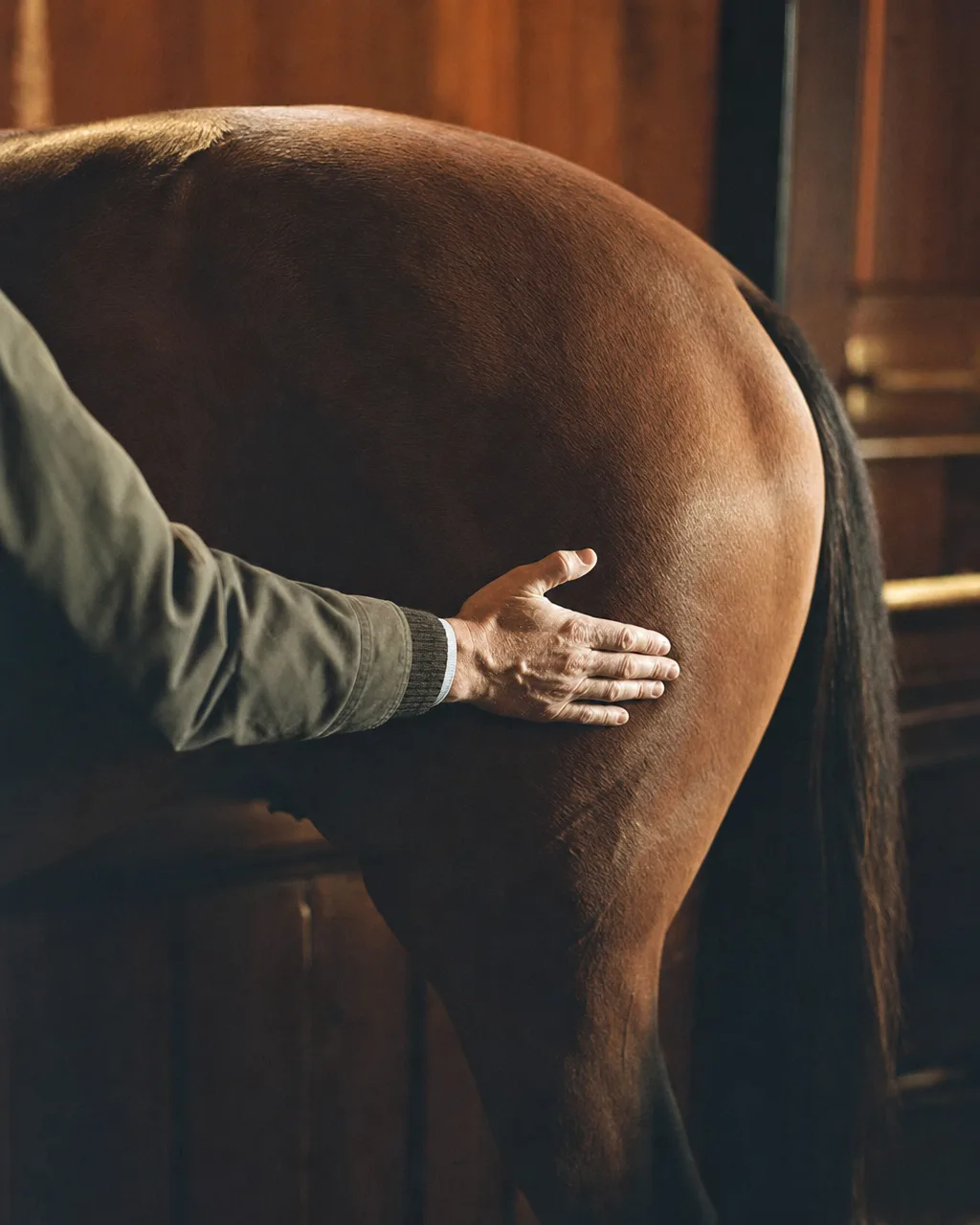
A horse with a genuine retained testicle is a different purchase than a clean gelding. Removing an abdominal testicle is a more involved operation than a routine gelding, with a higher cost and a recovery window, and the horse is technically a cryptorchid rather than a true gelding until it is done. That can touch how he is identified, insured, and managed. None of it is necessarily a deal-breaker, but it belongs in the price, not in a surprise after the sale.
A clean gelding who simply learned stallion manners is a different story. That is a training and management question, not a medical one, and a good horseman can often work with it. The behavior might cost you a little patience; it is not costing you a second surgery.
The independence point is the one a seller has every reason to blur. “He’s just proud cut, they’re all a bit like that” is a line that does two convenient things at once: it explains the behavior and it ends the conversation. As we’ve covered, that is not how the biology works. Treat the phrase as the start of due diligence, not the end of it — the same discipline that should govern how you buy any racehorse.
Consider a buyer looking at a well-bred gelding whose page mentions, almost in passing, that he can be “a bit studdish.” The cheap move is to assume proud cut and either panic or shrug. The disciplined move is to price in one blood test and one honest conversation with the vet before deciding what the behavior is actually worth.
Proud cut is a rumor until a vet makes it a finding.
Racing and training implications: when it matters, when it doesn’t
On the track, the practical question is simple: does the behavior cost you? A horse that won’t load or settle in the gate, fixates on fillies in the post parade, or is unsafe in the shedrow burns training days and puts people at risk. That is a real expense whether the cause is a hidden testicle or an old habit.
A confirmed retained testicle adds a paperwork wrinkle too. A horse with an undescended testicle is, strictly, a ridgling and not a gelding, which can affect how he is registered and identified. It is the kind of detail that is easy to sort out when you know about it before the sale and awkward to discover afterward.
And when does it not matter? Often. Plenty of geldings carry a little leftover attitude and race and train perfectly well. Once a vet has established that the behavior is habit rather than hormone, it becomes a management detail, not a disqualifier. This is buyer guidance, not a veterinary diagnosis — the determination is the vet’s job. Your job is to insist it gets made.
Can a proud cut horse get a mare pregnant?
A true gelding cannot get a mare pregnant — once both testicles are gone, there is no sperm and no sire potential. Stallion-like behavior after gelding is not the same thing as fertility: leftover epididymis tissue (the old “proud cut” story) does not produce sperm or testosterone, so that alone cannot sire a foal.
The exception is when the horse was never fully gelded — a retained or undescended testicle (cryptorchidism) that still produces hormone and sperm. In that case he is not a true gelding, and pregnancy is possible. That is why a blood test matters before you treat “proud cut” as a harmless label or as proof the horse is infertile.
Frequently asked questions
Can a proud cut gelding get a mare pregnant?
If “proud cut” means only leftover epididymis, no — there is no testicle producing sperm. But if the horse is actually a cryptorchid with a retained, functional testicle, he is not truly gelded and pregnancy is possible. That distinction is exactly why the blood test matters.
How do you test for a proud cut gelding?
A baseline blood test for testosterone is the starting point; very low levels indicate a true gelding. If the result is borderline, vets use an hCG stimulation test or an anti-Müllerian hormone (AMH) test to confirm whether hormone-producing tissue remains.
Is “proud cut” the same as a ridgling or cryptorchid?
Not quite. A ridgling (cryptorchid) is a horse with an undescended testicle. “Proud cut” is the older, broader label for a gelding that still acts like a stallion. They overlap because a missed cryptorchid testicle is one of the genuine reasons a gelding stays studdish. For the basics of sex status, see our guide to what “gelded” means and our stallion versus gelding breakdown.
Should I avoid buying a proud cut gelding?
Not automatically. Decide on a vet’s findings, not the label. A clean gelding with learned habits can be a sound, affordable buy. A horse with a confirmed retained testicle is a more involved purchase you should price accordingly — and walk into with your eyes open.
About the Author

Calvin Johnson is a Thoroughbred racehorse owner, day trader, and independent racing analyst with more than a decade of firsthand ownership experience. He has participated in nearly every common structure in horse racing — fractional platform shares, traditional syndicates, LLC partnerships, claiming ventures, and outright ownership — across more than two dozen horses. Calvin writes about racehorse ownership the same way he approaches markets: by studying risk, incentives, fees, and whether the people controlling the deal are aligned with the investors behind it.
- Calvin Johnsonhttps://racehorseownership101.com/author/calvin-johnson/

- Calvin Johnsonhttps://racehorseownership101.com/author/calvin-johnson/

- Calvin Johnsonhttps://racehorseownership101.com/author/calvin-johnson/

- Calvin Johnsonhttps://racehorseownership101.com/author/calvin-johnson/
