A bloodstock agent is a professional buyer’s advocate who finds, evaluates, and bids on racehorses for you, and at public auction the customary fee is 5% of the purchase price. In practical terms, that means a $75,000 yearling costs you about $3,750 in commission on top of the hammer price. The agent’s job is to keep you from overpaying for the wrong horse; the buyer’s job is to make sure the person protecting you from a bad deal isn’t quietly on both sides of it.
Most of what you will read about bloodstock agents is written by agents, farms, or career sites explaining how to become one. This is the prospective owner’s version: what the job actually is, how the money really moves, when the fee earns its keep, and the conflicts nobody volunteers before you sign. If you are still mapping out how you’ll buy in at all, start with our guide to how to buy a racehorse and every ownership path, then come back here for the agent question specifically.
The short version
- A bloodstock agent selects, vets, and bids on horses on your behalf; the standard auction commission is 5% of the purchase price.
- Private-sale commissions typically run 5%–10%, and who pays (buyer, seller, or both) is negotiable and must be spelled out.
- The percentage fee is a built-in conflict: an agent paid a share of the price has an incentive for you to spend more.
- Almost anyone can call themselves a bloodstock agent. References, a verifiable buying record, and a written agreement are your only real protection.
- You need an agent most when no one else on your team is already vetting horses for you.
What a Bloodstock Agent Actually Does
A bloodstock agent evaluates horses on the four things a catalog page can’t tell you and then negotiates and bids for you: conformation, pedigree, value, and suitability for your goals. That is the plain description the Thoroughbred Owners of California gives, and it matches what the good ones actually do at a sale. The agent walks the barns, watches horses jog, reads the veterinary repository, sets a walk-away number, and holds the paddle so you are not bidding on adrenaline.
You’re already studying the sport. Own a piece of it.
Every question you’re asking is one owners ask every morning at the barn. The free guide takes you from fan to owner.
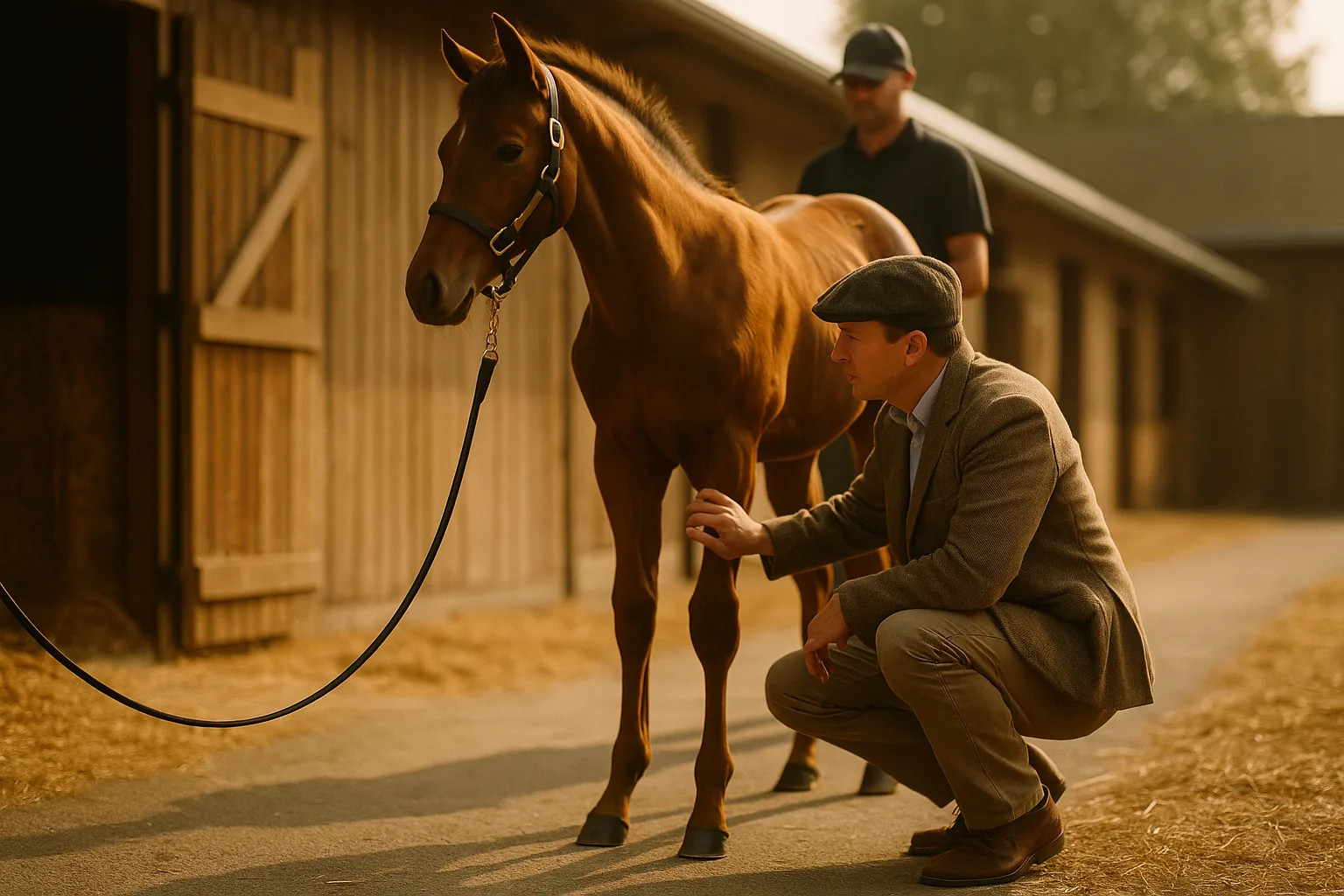
The value the agent adds is judgment under time pressure. A major auction moves fast: hundreds of horses over a few days, each shown for a few minutes, most of the physical and veterinary information available only on the grounds. An owner flying in for the first time is buying blind against people who do this for a living. A capable agent turns that firehose into a short list of horses that fit your budget and your plan, then tells you which ones to skip and, just as often, that you should buy nothing at all this week.
What an agent is not is a guarantee. They cannot make a slow horse fast, and the best judges in the business still buy horses that never win a race. What you are paying for is a lower chance of the expensive, avoidable mistake: the horse with a bad throat, the pedigree that looks better on paper than in the sale ring, the number that ran away from you at 11 p.m. under the lights.
How Bloodstock Agents Get Paid — the 5% Question
A bloodstock agent buying for you at auction almost always works on commission, and the customary rate is 5% of the purchase price with no separate charge for the agent’s travel. That figure is confirmed by the Thoroughbred Owners of California, which describes “the customary fee for selecting and purchasing horses at auction” as 5% of the price. Private sales are different and usually more expensive: commission there typically runs 5% to 10%, and the deal can have the buyer, the seller, or both paying it.
Typical Bloodstock Agent Commission Rates
| Purchase type | Customary buyer’s-agent commission |
|---|---|
| Public auction | 5% of the hammer (purchase) price |
| Private sale / private treaty | 5%–10% of the purchase price |
| High-volume or repeat buyers | Often negotiated below 5% |
| Very small purchases | A minimum flat fee may replace the percentage |
Because the fee is a percentage, the real dollar cost scales with the horse. On a modest purchase it is a rounding error against the annual cost of keeping a horse in training; on a six-figure yearling it is a serious line item worth negotiating. The math is not complicated, and it is worth seeing before you agree to anything.
What a 5% Commission Costs at Different Purchase Prices
| Horse purchase price | Agent’s commission at 5% |
|---|---|
| $25,000 | $1,250 |
| $75,000 | $3,750 |
| $150,000 | $7,500 |
| $500,000 | $25,000 |
Here is the part the fee schedule doesn’t say out loud: a commission tied to the price is a structural incentive for you to spend more. Every extra bid the agent talks you into also pays the agent. Most reputable agents ignore that pull and hold your walk-away number anyway, which is exactly why the record and references below matter so much. It is also why some experienced owners prefer a flat fee or a retainer for larger campaigns, so the person advising them has no financial stake in how high the bidding goes.
When You Actually Need a Bloodstock Agent — and When You Don’t
You need a bloodstock agent most when nobody else on your team is already vetting horses for you. That is the honest test, and it cuts against the industry’s default answer of “always.” If you are buying alone at a major auction with no sales experience, an agent is close to essential. If you are joining a partnership whose manager already inspects and buys, or you have a trusted trainer who selects your horses, you may be paying twice for the same judgment.
Agent vs. Going It Alone: Who’s Already Vetting Your Horse?
| You probably want your own agent if… | You can likely skip a separate agent if… |
|---|---|
| This is your first purchase and you have no sales-ring experience | You are buying into a vetted syndicate or partnership whose manager already inspects horses |
| You are buying at a major auction (Keeneland, Fasig-Tipton) among full-time professionals | You have a trusted trainer who selects and vets horses for you |
| The purchase is large enough that a 5% fee is small next to the cost of a wrong pick | You are pinhooking risks and returns or claiming and already know that specific market cold |
| You have no independent read on conformation or the veterinary repository | Your budget is small and stacking a 5% fee on top narrows your margin for error |
The age and type of horse you are chasing changes the calculation too. Reading a sales page for a weanling, a yearling, or a two-year-old in training each demands a different eye, which is why it pays to be clear on whether a yearling or a two-year-old fits your goals before you hire anyone. If your plan is to shop the catalog seriously yourself, our guide to reading a thoroughbred sale catalog before you bid will show you how much of the agent’s early filtering you can do on your own.
The Conflicts of Interest a Buyer Should Watch For
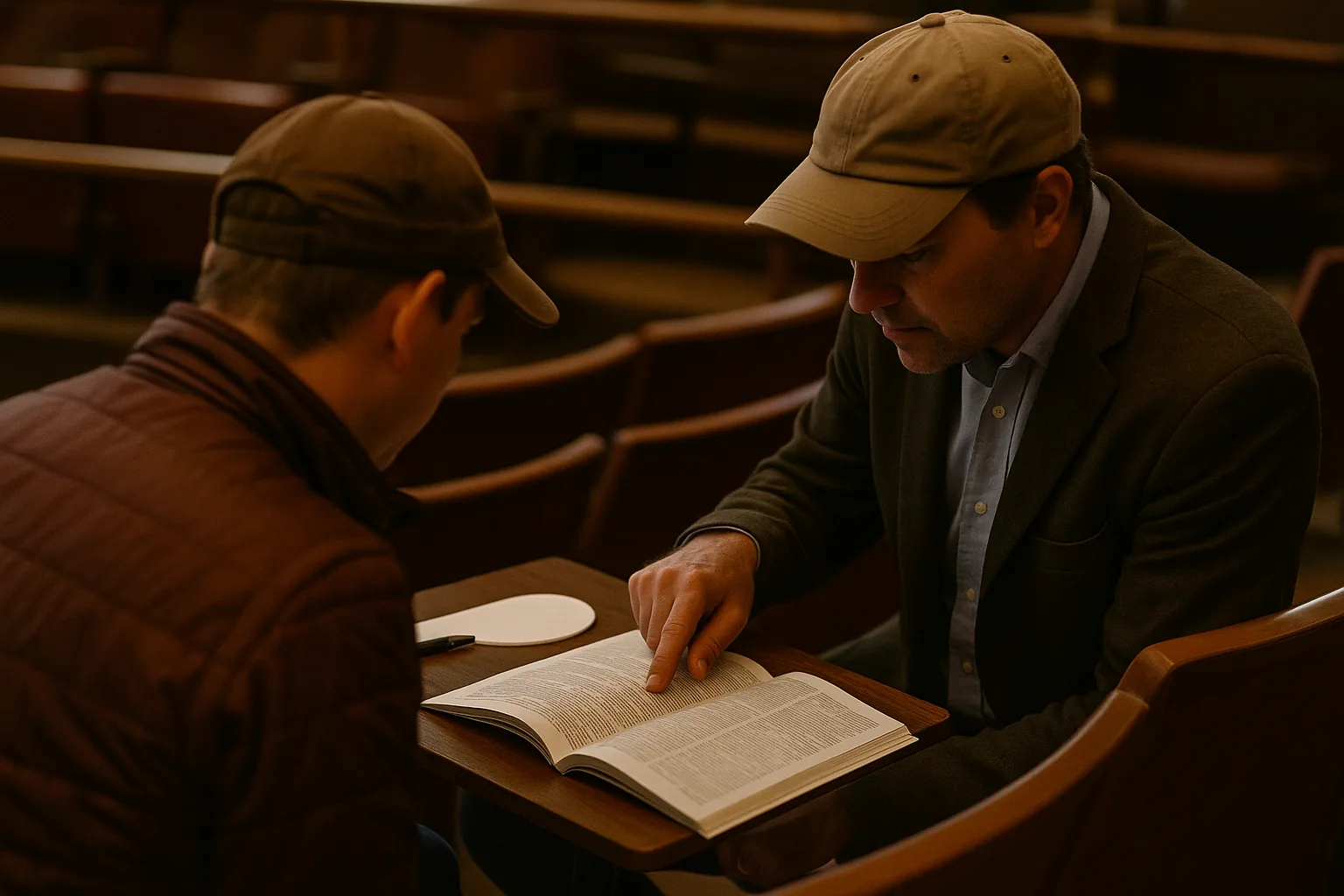
The biggest risk with a bloodstock agent is not incompetence; it is divided loyalty. The trade is loosely regulated: a handful of racing jurisdictions issue bloodstock licenses, but the license is not required to do business, and in practice almost anyone can call themselves an agent. There is no exam, no mandatory disclosure standard, and no single body vouching for the person spending your money. That gap is exactly why the buyer has to do the vetting the industry doesn’t do for you.
Three conflicts show up often enough to name plainly. The first is dual agency: an agent quietly representing both you and the seller, or taking a second commission from the consignor on the same horse, so their loyalty is split and you never know it. The second is the undisclosed markup: an agent buys the horse and resells it to you at a higher price without revealing what they actually paid. The third is the percentage incentive already covered above, the gentle pressure of a fee that grows every time you go one more bid.
Almost anyone can call themselves a bloodstock agent. A written agreement is the only thing that reliably works for the buyer.
None of this means agents are crooks. The profession’s history includes lawsuits from owners who alleged an agent and a trainer worked together against them, and those cases are the reason transparency rules exist at all. Sales integrity has been enough of a concern that some jurisdictions now require a written bill of sale stating the commissions paid to all parties, for the owner’s protection. So treat the risk as a paperwork problem rather than a reason to stay out. Every one of these conflicts is neutralized by a written agreement that names a single-agency relationship and requires full disclosure of any payment the agent receives from anyone but you.
How to Vet a Bloodstock Agent: A Buyer’s Checklist
Vetting a bloodstock agent comes down to references, a verifiable buying record, and a written agreement — the three things the industry’s minimal regulation leaves entirely to you. The Thoroughbred Owners of California is blunt that “screening and checking references are extremely important” precisely because so little else is required. Before you hand anyone your budget, work through this list.
- Ask for a real buying record. Names, sales, prices, and how those horses performed. Ask for proof, not a reputation.
- Call the references — and call owners, not just the agent’s friends. Ask whether the agent held the walk-away number and disclosed conflicts.
- Get the fee in writing. The percentage or flat fee, what it covers, and who pays veterinary, transport, and insurance costs.
- Require conflict disclosure in the agreement. Any commission, “luck money,” or payment the agent takes from a consignor or seller must be disclosed to you.
- Confirm single agency. The agent works for you on this purchase, not for the seller and you at once.
- Insist on a written bill of sale. It should state the true purchase price and every commission paid on the horse.
- Ask associations and auction houses for names. Owner groups and the sales companies can point you to agents with an established track record.
A good agent will welcome all of this. Transparency is the product they are selling, and the ones worth hiring know it. If asking for a written fee agreement and a bill of sale makes an agent bristle, you have learned the most important thing about them for the price of one uncomfortable conversation.
Frequently Asked Questions
Do I need a bloodstock agent as a first-time owner?
Usually yes, if you are buying on your own at auction with no sales experience. A first-time buyer at a major sale is competing against full-time professionals with far better information. The main exception is joining a partnership or syndicate whose manager already inspects and buys horses, in which case that vetting is built into your membership and a separate agent may be redundant.
How much does a bloodstock agent charge?
At public auction the customary commission is 5% of the purchase price, typically with no separate charge for the agent’s travel. Private-sale commissions usually run higher, in the 5% to 10% range, and who pays can be negotiated. High-volume buyers sometimes negotiate below 5%, and on very small purchases an agent may charge a minimum flat fee instead of a percentage.
Can I buy a racehorse without a bloodstock agent?
Yes. Nothing requires you to use an agent, and many owners buy through a trusted trainer, a syndicate manager, or by doing their own homework on the catalog and veterinary repository. Going without an agent saves the commission but puts the full burden of judgment on you or your trainer, which is a fair trade only if that judgment is genuinely there.
How do I find a reputable bloodstock agent?
Start with owner associations and the auction companies, which can recommend agents with an established record, then screen hard: ask for a verifiable buying history, call references who are owners rather than colleagues, and require a written fee agreement with full conflict disclosure. Because the field is only lightly regulated, those checks are the buyer’s real protection.
The Bottom Line
A bloodstock agent buys you expertise and discipline at the sale for a customary 5% of the purchase price, and for a first-time buyer walking into a major auction that fee is usually money well spent. The catch is that the same percentage that pays for the agent’s judgment also rewards them when you spend more, in a business where almost anyone can hang out a shingle. Hire the expertise, but put the relationship in writing: a stated fee, single agency, full disclosure, and a bill of sale that names every commission on the horse. For a wider view of where an agent fits among partnerships, claiming, and buying outright, the complete guide to buying a racehorse lays out every path. Additional background is available from the Thoroughbred Owners of California, the Retired Racehorse Project’s guide to navigating thoroughbred sales, and America’s Best Racing.
About the Author

Calvin Johnson is a Thoroughbred racehorse owner, day trader, and independent racing analyst with more than a decade of firsthand ownership experience. He has participated in nearly every common structure in horse racing — fractional platform shares, traditional syndicates, LLC partnerships, claiming ventures, and outright ownership — across more than two dozen horses. Calvin writes about racehorse ownership the same way he approaches markets: by studying risk, incentives, fees, and whether the people controlling the deal are aligned with the investors behind it.
- Calvin Johnsonhttps://racehorseownership101.com/author/calvin-johnson/
- Calvin Johnsonhttps://racehorseownership101.com/author/calvin-johnson/

- Calvin Johnsonhttps://racehorseownership101.com/author/calvin-johnson/
- Calvin Johnsonhttps://racehorseownership101.com/author/calvin-johnson/