Pinhooking in horse racing means buying a young horse — usually a weanling or a yearling — and reselling it at a later auction for a profit, without racing it. You are betting the horse will present better at the next sale than it did at the last one, and that the market will pay you for the difference.
What is pinhooking?
Pinhooking is buying a young Thoroughbred — usually a weanling or a yearling — and offering it at a later auction rather than racing it. The buyer is paying for the next presentation of the same horse: more growth, more prep, a different sale, and a different room.
What is a pinhook horse?
A pinhook horse is a young horse bought to be resold, not to race for the person who bought it. Most pinhooks start as weanlings or yearlings; the horse typically never starts in a race while it is on that path.
How does pinhooking in horse racing work?
You buy at one sale, carry the horse through board, farrier, veterinary work and sale prep, then offer it at a later sale. Carry costs run whether the horse presents well or not, and a missed reserve leaves you holding an animal you did not plan to train. That is the trade, not a shortcut around ownership.
The first pinhook I ever watched up close looked like free money. A friend bought a stocky colt as a weanling for what felt like a bargain, turned him out for a winter, and sold him eleven months later at a yearling sale for nearly double — until the next one taught him what carry costs and a missed reserve actually feel like. Pinhooking horses is a real business, but the version first-time owners imagine is not the version the numbers describe.
The short version
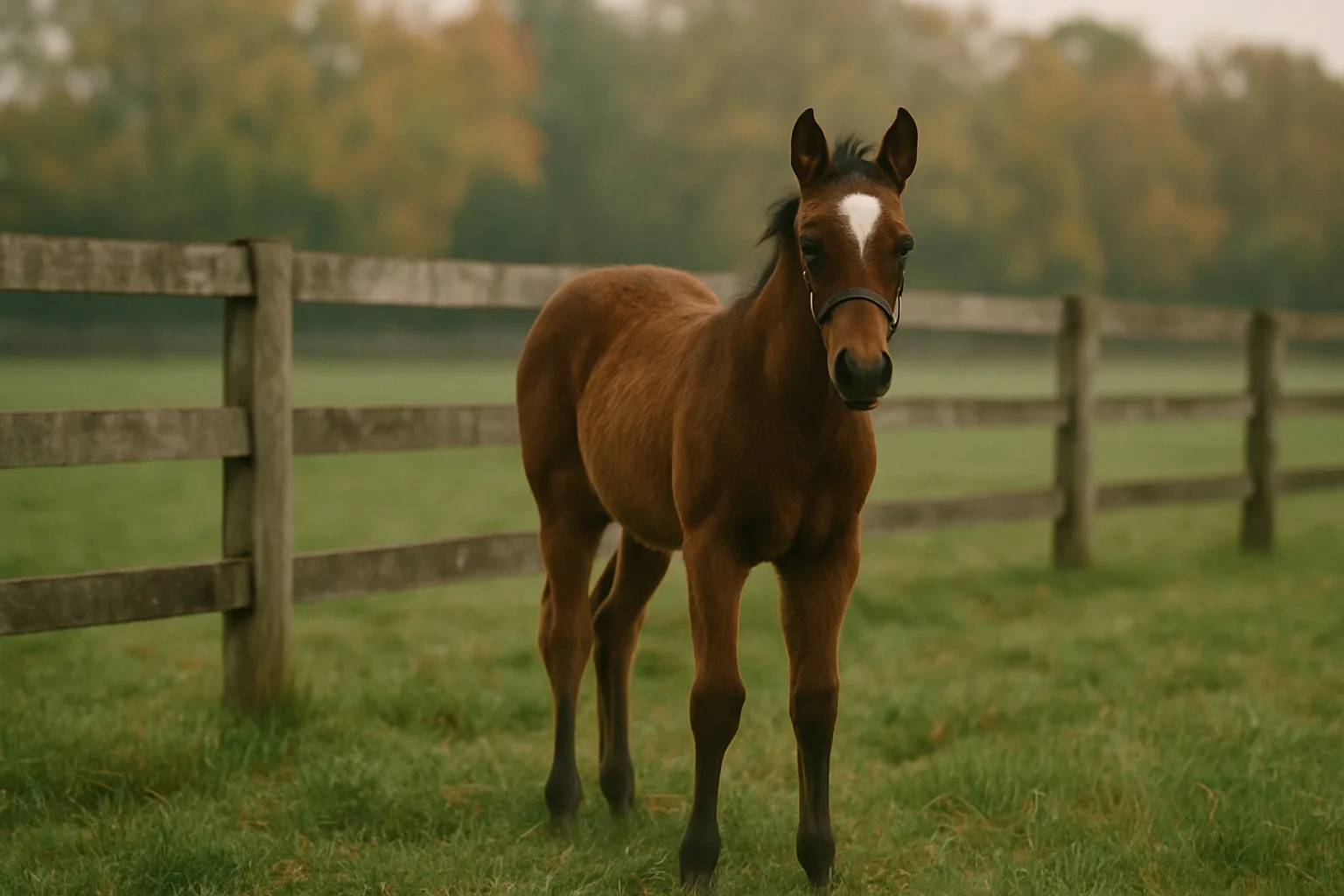
- Pinhooking means buying a young horse — usually a weanling or a yearling — and reselling it at a later auction for a profit, without ever racing it.
- The market’s average return looks great. In 2021, US weanlings pinhooked as yearlings bought for an average of $48,831 and resold for $99,506 — a 55% average return, per BloodHorse’s Auction Digest analysis.
- The distribution tells a different story. At mid-market sales, more pinhooks lose money than make it — the average is dragged up by a handful of big hits.
- For a first-time owner without an eye for conformation, a farm network, and capital to spread across several horses, pinhooking is closer to a hobbyist trap than a way in.
What pinhooking actually is
Pinhooking is short-term horse trading. You buy a horse young, hold and develop it, then resell it at a later sale to a buyer who will race it. You are not betting on the racetrack; you are betting that the horse will present better at the next auction than it did at the last one, and that the market will pay you for the difference.
The Sport of Kings has a side entrance. Here’s the key.
Regular people own racehorses — together, in partnerships — and stand in the paddock like they were born there. The free guide shows you the way in.
There are two common paths, and they are not the same trade:
- Weanling to yearling. Buy a foal in the autumn weanling sales, raise it over the winter, and resell it the following autumn as a yearling. The holding window is roughly ten to twelve months.
- Yearling to two-year-old. Buy a yearling, send it to a professional to be broken and taught to gallop, then resell it at a two-year-olds-in-training sale where buyers watch it breeze under tack. The window is similar, but the prep is far more intensive — and more expensive — because the horse has to perform, not just look the part.
Both are legitimate. Both are how a lot of nice racehorses reach the people who eventually campaign them. But both ask you to be a trader first and a horseman second, and that is the part the brochures skip.
Pinhooking vs. buying at the yearling sale
If your goal is simply to own a racehorse, pinhooking is the long way around — you take on the carry, the prep, and the sale-day risk, and at the end you have sold the horse to someone else instead of racing it yourself. It is worth being honest about which game you are actually playing before you bid, because they reward completely different things.
Pinhook vs. straight purchase, side by side
| Question | Pinhooking (buy young → resell) | Buying at the yearling sale (to race) |
|---|---|---|
| Your goal | Trade the horse for a profit at the next sale | Own and race the horse |
| Time horizon | ~10–12 months to the resale | Years, across the racing career |
| Upfront purchase | Usually lower — weanlings sell for less | Usually higher — yearlings cost more |
| Carry before any payoff | Board, vet, farrier, insurance and prep for the whole gap, then a sales commission | No resale gap; real costs start when the horse goes into training |
| Skill it rewards | A conformation eye, market timing, and prep management | Trainer selection — you can lean on a professional team |
| Main downside | It fails to sell, or sells below your all-in cost | The horse is slow — but racing was the point |
| Who it suits | Traders with an eye, a network, and capital to spread | Owners who want to race, not trade |
Most first-time owners I talk to say they want to own a racehorse. If that is you, the honest route is the one laid out in our guide to how to buy a racehorse — pick a path built around racing, not reselling. Pinhooking only makes sense if the trade itself is the thing you find interesting.
The carry-cost math nobody puts in the brochure
The purchase price is the number everyone quotes. The carry cost is the number that decides whether you made money. From the day you sign the ticket to the day your horse walks back through the ring, you are paying to keep it alive, sound, and sale-ready — and none of that stops if the horse gets hurt or the market cools.
Both the US and European analyses converge on roughly $12,000 in all-in carry for a weanling-to-yearling pinhook — keep, feed, veterinary, shoeing, sales prep, and entry fees. That figure is the tier-1 anchor; the breakdown below is a representative view of how that total tends to divide. Prep is the part first-timers underestimate: the six to eight weeks of conditioning before a sale is its own cost spike, on top of the daily board you have already been paying all year.
A representative weanling-to-yearling carry
| Cost line (≈10–11 months) | Representative range | What it covers |
|---|---|---|
| Farm board & daily care | $4,000–$7,000 | Turnout, feed, handling, the everyday raising of the horse |
| Routine veterinary & vaccinations | $800–$2,000 | Wellness, worming, shots — more if anything goes wrong |
| Farrier | $400–$800 | Trims roughly every six weeks; corrective work costs more |
| Mortality insurance | $1,500–$3,000 | Typically a few percent of the horse’s value per year |
| Sales prep & consignment/entry fees | $2,000–$4,000 | The pre-sale conditioning spike, plus entry and consignor costs |
| All-in carry | ≈ $12,000 | Before the purchase price and before the sales commission |
Two-year-old pinhooks run higher still, because breaking and galloping a horse — plus the risk that it takes a bad step on the track — adds cost and adds ways to lose. The repository X-rays and the pre-purchase exam that a resale buyer will scrutinize are the same ones you should be reading when you buy; our explainer on how the sales repository and pre-purchase vet exam work is worth reading before you take on a young horse you intend to sell to a vetting buyer.
What the average return hides
Here is where the buyer-protection lens matters most. That 55% average return is real, but it is an aggregate — the average sale price divided by the average purchase price, in a hot year, across hundreds of horses. Average all the buys and average all the sells and you get a cheerful headline. It is not the return the typical horse earned, because a small number of five- and six-figure hits pull the whole average upward.
When Thoroughbred Daily News broke the results down horse by horse across the 2024 European yearling sales, the shape of the risk showed up plainly. At the mid-market sales — the level a first-timer can actually afford — more pinhooks lost money than made it. Only at the elite, boutique end did the majority turn a profit.
Pinhook outcomes by sale level (TDN, 2024)
| Sale | Turned a profit | Lost money | Average result |
|---|---|---|---|
| Goffs UK Premier (mid-market) | 37% | 59% | +£20,800 winners / −£17,500 losers |
| Tattersalls Somerville (mid-market) | 29% | 67% | ≈ −£18,600 on the losing lots |
| Arqana August (elite / boutique) | 67% | 33% | +€124,650 winners / −€74,200 losers |
These are European sales in pounds and euros, so read them as directional rather than a US price sheet. The pattern, though, travels: as TDN’s Emma Berry put it, “pinhooking is a risky old business, but then again, so is breeding.” At accessible price points, the base rate is against you, and the pros who play there survive by doing many pinhooks at once so a couple of winners can cover a stack of losers. A first-timer doing a single horse has no such cushion — you get one roll of the dice, and the odds on that roll are worse than the average return implies.
The average pinhook made money. The average pinhooker, at the level you can afford, did not.
Break-even: a worked example
Numbers make this concrete. The example below is illustrative — round figures anchored to the 2021 US market averages, not a specific horse — so you can see how the stack works and then plug in your own. Say you buy a weanling near the market average and carry it to the yearling sale.
A worked pinhook, start to finish (illustrative)
| Line | Amount |
|---|---|
| Weanling purchase price | $40,000 |
| All-in carry (~11 months) | $12,000 |
| Total in the horse before the sale | $52,000 |
| Sales commission at resale (5%) | Deducted from the hammer price |
| Hammer price needed just to break even | ≈ $54,700 |
To get your $52,000 back after a 5% commission, the horse has to sell for about $54,700 — a 37% markup on what you paid for it before you have made a single dollar. Anything less than roughly $55,000 and you have effectively paid for the privilege of raising someone else’s yearling. And that assumes the horse sells at all: in the 2021 US sample, about one in five pinhooked yearlings did not sell. When that happens you have spent the $52,000 and you still own the horse — now facing a choice between carrying it further or racing a horse you bought to sell.
Who pinhooking is for — and who should walk away
None of this makes pinhooking a bad business. It makes it a professional one. The people who do it well share a short list of traits, and it is worth being honest with yourself about how many you can check off before you commit real money.
Pinhooking probably fits you if
- You can read conformation yourself, or you trust an independent adviser who is not also selling you the horse.
- You have a farm relationship and the horsemanship to manage — or supervise — a young horse’s development and prep.
- You have enough capital to do several pinhooks at once, so one bad result does not sink you.
- You find the trade itself interesting, and you would not be crushed to sell a horse you have grown fond of.
- You can absorb a total loss on any single horse without it changing your life.
Walk away, or start differently, if
- This is your first horse and you actually want to race one — pinhooking will not scratch that itch, because you sell before the fun starts.
- You would be doing a single pinhook and betting the outcome on one horse.
- You are relying entirely on someone whose income depends on you buying.
- The carry cost would stretch you if the horse got hurt or failed to sell.
If you want exposure to young horses without carrying one alone, a partnership or syndicate share is usually the smarter first step — you get the education and a fraction of the risk. The age-at-purchase trade-offs are worth understanding either way; we cover them in yearling vs. two-year-old for partnership buyers.
Red flags for first-time buyers
Because pinhooking is a bloodstock professional’s business model, most of the content you will find explaining it is written by people who profit when you take part. That does not make them wrong, but it does mean the risks get soft-pedaled. Three in particular deserve a hard look.
- The double-dip. An agent who charges you a commission to buy the weanling, manages the prep at a markup, and then takes a commission to sell the yearling is paid three times regardless of whether you make a dollar. That is not automatically improper, but you should know exactly who is paid at each step, and how much, before you agree to anything.
- Prep shortcuts. A horse can be pushed to look bigger and shinier for a sale than its long-term soundness supports. Buyers vet hard at the resale precisely because of this — which means if you cut corners on care to save on carry, the exam that undoes your sale is the same repository and vet review you can read about in our guide to reading a sale catalog.
- The conformation gamble. Selecting a weanling that will “grow into” a saleable yearling is a genuine skill built over years. If you cannot evaluate it yourself and you do not have a truly independent set of eyes, you are gambling on someone else’s judgment and paying carry costs while you wait to find out if they were right.
Frequently asked questions
What are the risks and returns of pinhooking?
Returns look generous when you read market averages; risk shows up when you look at the distribution. At mid-market sales, more pinhooks lose money than make it — a handful of big hits pull the average up. Commissions, board, prep, and vet work eat the margin on ordinary horses, and a missed reserve leaves you carrying the horse into a different budget. Treat pinhooking as a spread-risk trade across several horses over several years, not a one-shot flip.
Is a weanling-to-yearling or a yearling-to-two-year-old pinhook better for a beginner?
Neither is truly beginner-friendly, but weanling-to-yearling is the less punishing of the two. The two-year-old route adds breaking, galloping, and the risk of a training injury, all of which raise both the cost and the number of ways the plan can fail before sale day.
What profit margin can I realistically expect?
Do not anchor on the market’s average return. At the mid-market price points a first-timer can reach, the honest expectation for a single horse is that you are more likely to lose money than make it, and that commissions and carry costs eat most of any nominal gain. Pinhookers make the model work by spreading risk across several horses over several years, not by hitting on one.
Do I need a bloodstock agent to pinhook?
You need expertise — an eye for conformation and pedigree and a feel for the market. You can hire that, but insist on knowing whether the person advising you also earns from the purchase, the prep, and the sale. An adviser paid a flat fee has different incentives from one paid a percentage at every step. Independence is the thing you are really buying.
Can I just race the horse if it does not sell?
You can, and plenty of pinhookers do — it is the built-in fallback. But racing a horse is a different budget and a different commitment than trading one, and “I’ll race it if it doesn’t sell” should be a plan you can afford from the start, not a consolation you back into on sale day.
Sources: BloodHorse, “Auction Digest: Growth in Returns Spur Pinhookers” (2021 US weanling-to-yearling data); Thoroughbred Daily News, “Pinhooking: Paradise or Purgatory?” by Emma Berry (2024 European sales analysis). Carry-cost breakdown is a representative decomposition of the ~$12,000 all-in figure both analyses cite; the worked example is illustrative.
About the Author

Calvin Johnson is a Thoroughbred racehorse owner, day trader, and independent racing analyst with more than a decade of firsthand ownership experience. He has participated in nearly every common structure in horse racing — fractional platform shares, traditional syndicates, LLC partnerships, claiming ventures, and outright ownership — across more than two dozen horses. Calvin writes about racehorse ownership the same way he approaches markets: by studying risk, incentives, fees, and whether the people controlling the deal are aligned with the investors behind it.
- Calvin Johnsonhttps://racehorseownership101.com/author/calvin-johnson/

- Calvin Johnsonhttps://racehorseownership101.com/author/calvin-johnson/

- Calvin Johnsonhttps://racehorseownership101.com/author/calvin-johnson/

- Calvin Johnsonhttps://racehorseownership101.com/author/calvin-johnson/