From a buyer’s seat, a yearling horse is a young Thoroughbred in its second calendar year — unraced, usually unbroken — judged on pedigree, conformation, and how it walks across a sales ring. The first thing most prospective owners want to know about a yearling versus a two-year-old is which one wins more races. It is the wrong first question. The age you buy into changes what you can actually see before you pay, how long you wait before the horse ever starts, and how many training bills land in between — and those are the things that decide whether the experience turns out to be a good one.
Operators that sell shares in both ages will tell you that whichever one they happen to have inventory in this season is the smart buy. I would rather give you the trade-offs straight, because the right answer is not the same for every budget or every temperament. This is the decision underneath the decision, and it is worth understanding before a partnership frames it for you.
The short version
- A yearling is an unraced, usually unbroken young horse — you buy it on pedigree, conformation, and how it walks. A two-year-old in training is broken, in work, and often breezed in public before the sale, so you have seen it move.
- The real trade is feedback and time. A yearling costs less at the hammer but carries a longer bill before it ever runs. A two-year-old costs more up front because someone has already paid to break and train it.
- In a partnership you are usually not choosing the horse at all — the manager is. The age matters less than who selects, what they add on top of the sale price, and who carries the bills before the first start.
The short answer
A yearling is a young Thoroughbred in its second calendar year of life. What a yearling horse actually is, from a buyer’s seat, is a prospect with no race record and usually no formal training yet — you judge it on its pedigree, its physical conformation, and the way it walks across a sales ring. A two-year-old in training is a year further along: broken to saddle, in active training, and at the major juvenile sales it has breezed a short distance in front of buyers, so its first real workout is already on the clock. The yearling is the cheaper, longer, more uncertain bet; the two-year-old is the more expensive, faster, more visible one. Which is right depends on how much you want to see before you pay, and how long you are willing to wait with no feedback while the bills run.
Racing’s best-kept open secret: you don’t have to just watch.
Ownership groups let regular people own a share of a real racehorse. The free guide explains how it works, in ten minutes.
Yearling vs. two-year-old at a glance
| What you’re buying | Yearling | Two-year-old in training |
|---|---|---|
| Age & status | In its second calendar year; unraced, usually unbroken | Broken and in training; often publicly breezed before the sale |
| What you can actually see | Pedigree, conformation, and the walk — no athletic evidence yet | A timed workout (the under-tack breeze) on top of pedigree and conformation |
| Purchase price | Generally lower at the hammer | Generally higher — it already includes the breaking and training |
| Time to first start | Longer — roughly a year or more of breaking, training, and growing | Shorter — often only months from a debut |
| Bills before it races | More months of board and training before any answer | Fewer — you join closer to the racing |
| Main risk you carry | A longer unknown: talent and soundness both still unproven | Paying up for a short, fast snapshot that may not translate |
| Best for an owner who | Wants the lowest entry and can wait patiently with little feedback | Wants to see a horse move first and reach the races sooner |
What a yearling actually is
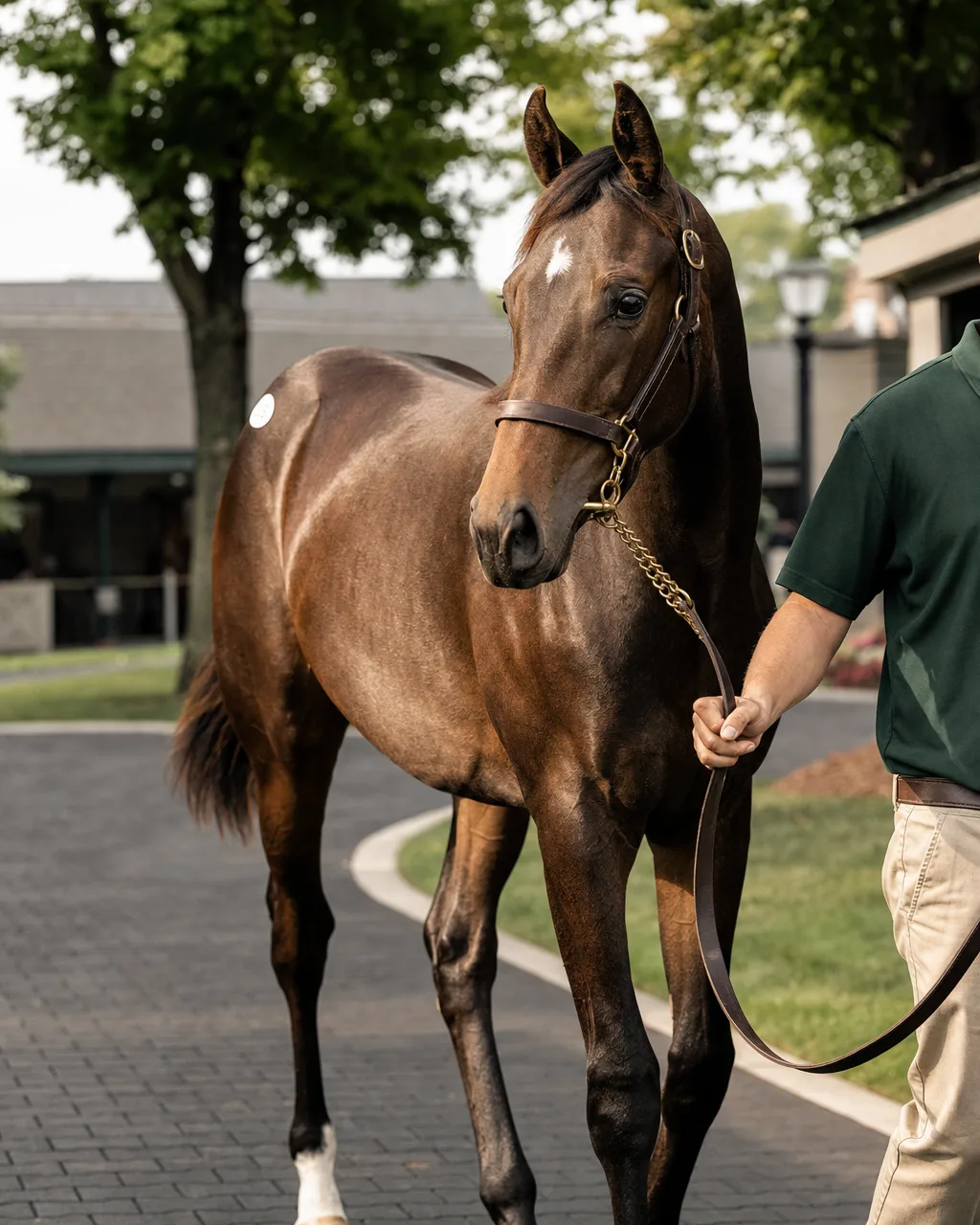
A yearling is a horse in its second calendar year — and the calendar is the strange part. For the full age vocabulary (foal, weanling, yearling, 2-year-old, colt vs foal), see racehorse age stages explained. Every Northern-Hemisphere Thoroughbred is considered a year older every January 1, no matter when it was actually foaled. A horse born in the spring of 2025 becomes a yearling on January 1, 2026, is sold as a yearling that autumn, and turns “two” on January 1, 2027 — whether its birthday is February or May. So a yearling at a September sale is physically a young teenager in horse terms: well grown, but a year or more away from carrying a rider in a race.
That is why a yearling sale is an exercise in projection — and why knowing how to read a sale catalog page matters before you bid. There is no workout to watch and no past performances to read. Buyers and their agents judge the physical — bone, balance, how the legs are set, how the horse moves at the walk — against the page, the pedigree that hints at how it might develop. Plenty of good horses are bought this way, and the entry price is usually lower than the same horse will cost a year later. But you are paying for potential you cannot yet see run, and you are signing up for a long stretch of breaking, training, and board before the horse tells you anything.
What changes with a two-year-old in training
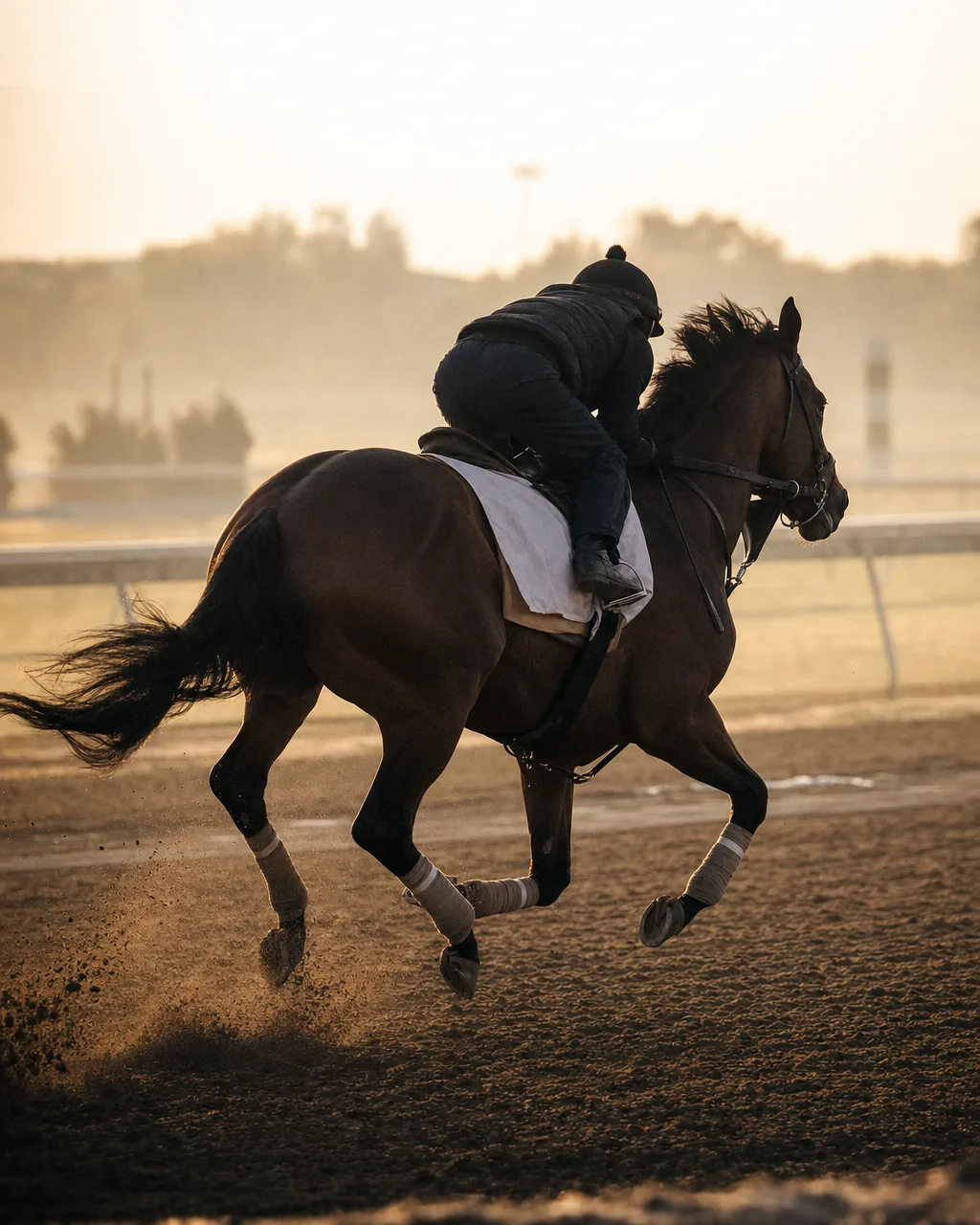
A two-year-old in training has crossed the line a yearling has not: it has been broken to saddle and is doing real work. At the juvenile sales — the Ocala Breeders’ Sales company runs the best-known of them — each horse goes through an under-tack show, breezing a short distance, often an eighth of a mile, while buyers and clockers watch and time it. For the first time, you are not projecting from a pedigree. You are looking at a horse that has shown it can run fast, on a stopwatch, in front of you.
That visibility is the product, and you pay for it. The consignor has already absorbed the months of breaking and training a yearling buyer would have to fund themselves, and the price reflects it — frequently a meaningful step up from what the same horse changed hands for as a yearling. The catch is that a breeze is a sprint snapshot. A horse that fires an eye-catching eighth has proven speed over a few seconds, not stamina, soundness over a campaign, or the temperament to repeat it on race day. And the hard, fast early work that produces a sharp breeze can itself expose a young horse’s legs. You are buying down one kind of uncertainty and, sometimes, buying into another.
The cost curve: paying now vs. paying later
The purchase price is the part everyone compares, and it is the part that misleads. The cheaper buy is not the cheaper horse. Buy a yearling and the lower hammer price is only the down payment — behind it sits a year or more of board, breaking, and training fees that arrive every month long before the horse earns a cent. Buy a two-year-old and you pay more at the sale, but you are joining the bill closer to the races, with fewer pre-debut months to fund. Someone always pays for that first year of development. The only question is whether it is priced into your purchase or billed to you afterward.
A yearling is a bet on a body that has not run. A two-year-old is a bet on a workout you have already watched.
This is also where the two ages meet the rest of your budget. Whichever you choose, the ongoing cost of keeping a horse in training is the figure that dwarfs the purchase over time — the same reality covered in our breakdowns of what a racehorse actually costs and the monthly training bills. A yearling simply front-loads more of those months onto you before there is any racing to show for them. If your appetite is for the experience sooner, the two-year-old shortens the wait; if it is for the lowest possible entry and you can sit through a quiet year, the yearling rewards patience.
The partnership questions nobody puts on the sales page
Most first-time owners do not buy a yearling or a two-year-old outright — they buy a share of one through a partnership or syndicate. That changes the decision in a way the age comparison alone misses: you are not the one picking the horse. The manager selects it, sets the price of the shares, and decides how the bills flow. The age on the sales page matters far less than the answers to four questions about the people running it.
- Who actually chose this horse, and on what record? A manager buying two-year-olds is betting on their eye for a breeze; one buying yearlings is betting on their eye for a physical and a page. Ask to see how their past purchases at that age have actually run.
- What is the share price relative to what the horse cost? The hammer price and your buy-in are not the same number. The difference is the markup and fees, and you are entitled to understand it before you wire money.
- Who carries the training bills, and from when? With a yearling especially, there can be a long pre-racing stretch of monthly fees. Confirm whether those are inside your share price or billed on top — and for how many months.
- What is the plan and the timeline? A two-year-old should have a near-term path to a start; a yearling has a development runway. Make the manager say, in months, when you should expect the horse to actually race.
In a partnership you are not really choosing an age. You are choosing the person who chooses the age — and the fee they add on top.
None of this is unique to the yearling-or-two-year-old fork; it is the same independent, numbers-first scrutiny that should travel with any partnership decision, including the related question of whether to back a colt or a filly. The age sets the shape of the bet. The manager decides whether it is a fair one.
Your yearling-vs-two-year-old decision checklist
- Do you want to see the horse run before you pay? If yes, lean two-year-old in training — the breeze is the closest thing to evidence you will get pre-purchase.
- Is the lowest entry price the priority? If yes, the yearling usually wins at the hammer — as long as you have budgeted the year of bills behind it.
- How long can you wait with no feedback? Short fuse, two-year-old. Comfortable with a quiet developmental year, yearling.
- What is your real all-in number? Add the purchase to the months of training before a likely first start. Compare the two ages on that total, not on the sale price.
- If it is a partnership, do the people clear the four questions above? If the selection record, the markup, the bill structure, or the timeline is vague, the age is the least of your problems.
Frequently asked questions
What is a yearling horse?
A yearling is a horse in its second calendar year of life. In Thoroughbred racing, every Northern-Hemisphere horse is treated as a year older each January 1 regardless of its actual foaling date, so a yearling is roughly one to nearly two years old, unraced, and usually not yet broken to saddle. Yearlings are sold on pedigree and physical conformation rather than any racing or workout record.
How old is a yearling horse?
Because of the universal January 1 birthday, a Thoroughbred yearling’s official age and its real age can differ by a few months. Officially it is one year old for the whole calendar year following its birth; physically it ranges from about twelve to nearly twenty-four months old depending on when in the year it was foaled. Either way, it is a year or more away from racing.
Is it better to buy a yearling or a two-year-old?
Neither is better in the abstract. A yearling costs less to buy but carries a longer, more uncertain wait and more months of training bills before it races. Traders who buy that same yearling to resell — pinhooking horses rather than racing them — are playing a different game with different math. A two-year-old in training costs more because the breaking and training are already done, but you have seen it breeze and it is closer to a start. Choose on your budget, your patience, and how much you want to see before you pay — and in a partnership, on the manager’s selection record and fee transparency more than on the age itself.
What is a two-year-old in training sale?
It is an auction of juvenile horses that have already been broken and put into training. Its signature feature is the under-tack show, where each horse breezes a short distance — often an eighth of a mile — in front of buyers and clockers before the sale. Buyers use those timed workouts, alongside conformation and pedigree, to judge horses that a yearling sale would have offered with no athletic evidence at all.
Yearling or two-year-old, the age you buy is really a choice about how much you want to know before you commit, and how long you are willing to pay while you wait to find out. Decide that honestly, hold the partnership to the same standard, and the rest of the comparison falls into place.
— Race Horse Ownership 101
About the Author

Calvin Johnson is a Thoroughbred racehorse owner, day trader, and independent racing analyst with more than a decade of firsthand ownership experience. He has participated in nearly every common structure in horse racing — fractional platform shares, traditional syndicates, LLC partnerships, claiming ventures, and outright ownership — across more than two dozen horses. Calvin writes about racehorse ownership the same way he approaches markets: by studying risk, incentives, fees, and whether the people controlling the deal are aligned with the investors behind it.
- Calvin Johnsonhttps://racehorseownership101.com/author/calvin-johnson/

- Calvin Johnsonhttps://racehorseownership101.com/author/calvin-johnson/

- Calvin Johnsonhttps://racehorseownership101.com/author/calvin-johnson/

- Calvin Johnsonhttps://racehorseownership101.com/author/calvin-johnson/