
A lease interest in a racehorse is the right to race a horse you do not own, for a fixed term, in exchange for a fee, a share of what the horse earns, or both. The lessor keeps legal title, takes the horse back when the term ends, and normally keeps its breeding rights. You get the racing — the entries, the silks, the purse cheques — and you get the bills: training day rate, vet, farrier, shipping, entry and jockey fees, arriving every month whether or not the horse ever hits the board. In Kentucky, a horse may be raced under lease only with the stewards’ approval, and the lessee has to be licensed as an owner in their own name. Leasing changes what you hold at the end of a season. It changes much less about what you pay along the way.
The honest answer
- A lease interest buys a racing campaign, not an asset. When the term ends the horse goes back to the lessor and there is nothing left for you to sell.
- The running bills do not shrink because you are leasing. The lease fee is usually the smallest number in the arrangement; the day rate, the vet and the entries are the large ones, and they are yours.
- The clause almost nobody reads is the claiming clause. A lease has to state the lowest price the horse may be entered for and name who receives the money if it is claimed — and that payee is normally the lessor.
What a lease interest in a racehorse actually is
A lease interest is a contractual right to race a named horse for a set term. It is not a share of the horse itself. The mechanics are not disputed by anyone in the sport: the lessor owns the animal and goes on owning it, the lessee races it and pays for it, and at the end of the agreed period the horse goes home. Leases are written for whole horses and for percentages — you can hold a 25% lease interest much as you can hold a 25% ownership interest, with your share of the revenue and your share of the costs both scaled to that number.
The Sport of Kings has a side entrance. Here’s the key.
Regular people own racehorses — together, in partnerships — and stand in the paddock like they were born there. The free guide shows you the way in.
What the mechanics leave out is the shape of the economics. A racehorse has two value streams: what it earns while it races, and what it is worth when it stops. A lease sells you the first and keeps the second. You carry a full campaign’s costs and the full risk that the horse is slow, sore or both, and if the horse turns out to be good, the appreciation belongs to the person you have been paying. For some buyers that is the right deal. It becomes a problem only when a lease is pitched as a cheaper way into ownership, because a lease is not a way into ownership at all.
Who is who in a racehorse lease
- The lessor owns the horse, keeps title throughout, and takes it back at the end of the term.
- The lessee races the horse, is licensed as an owner in their own name, and pays the horse’s bills for the length of the lease.
- The horse never changes hands. It changes stables, silks and paymasters, and its papers stay where they were.
Lease, buy or syndicate share: where the money actually goes
Leasing, buying outright and buying a syndicate share differ on four things that decide everything else: what you pay at the start, what you pay every month, who controls the horse, and what you hold when it is over. We are not going to invent a range for a lease fee, because there is no honest one to give — a lease on a maiden three-year-old and a lease on a stakes-placed mare are not the same product. The monthly side is far more predictable, and it is the side that decides whether the arrangement is affordable; our breakdown of what a Thoroughbred costs to keep by month applies to a leased horse in full.
Seasonal lease vs. outright purchase vs. syndicate share, side by side
| Racehorse lease | Outright purchase | Syndicate or fractional share | |
|---|---|---|---|
| What you pay at the start | A lease fee, or nothing at all where the lessor takes a share of earnings instead | The purchase price of the horse | The share price, plus whatever the offering front-loads |
| What you pay every month | All of the horse’s running costs, or your pro-rata share of them | All of the horse’s running costs | Your pro-rata share of costs, plus management fees |
| Who controls the horse | You, within the limits the lease sets — and the lease can set a lot of them | You | Ordinarily the manager; shareholders rarely hold decision rights |
| Purse money | Paid to you as owner of record, less customary jockey and trainer percentages and any earnings share owed to the lessor | Paid to you, less customary jockey and trainer percentages | Reaches you through the agreement’s distribution mechanism, net of fees |
| What you hold at the end | Nothing. The horse returns to the lessor | The horse, including its residual, salvage and breeding value | A share of the horse, including a share of its residual value |
| Getting out early | Only if the lease has a termination clause. There is no interest to sell | Sell privately, enter a claiming race, or retire the horse | Per the agreement; commonly restricted and often illiquid |
Read the bottom two rows together and the trade is clear: the lease is the only column where you hold nothing at the end, and it is also the column with the thinnest exit. That is the price of not funding a purchase. If you are still mapping the options, we cover every path into ownership separately, and fractional horse ownership in its own guide.
What a racehorse lease still costs you every month
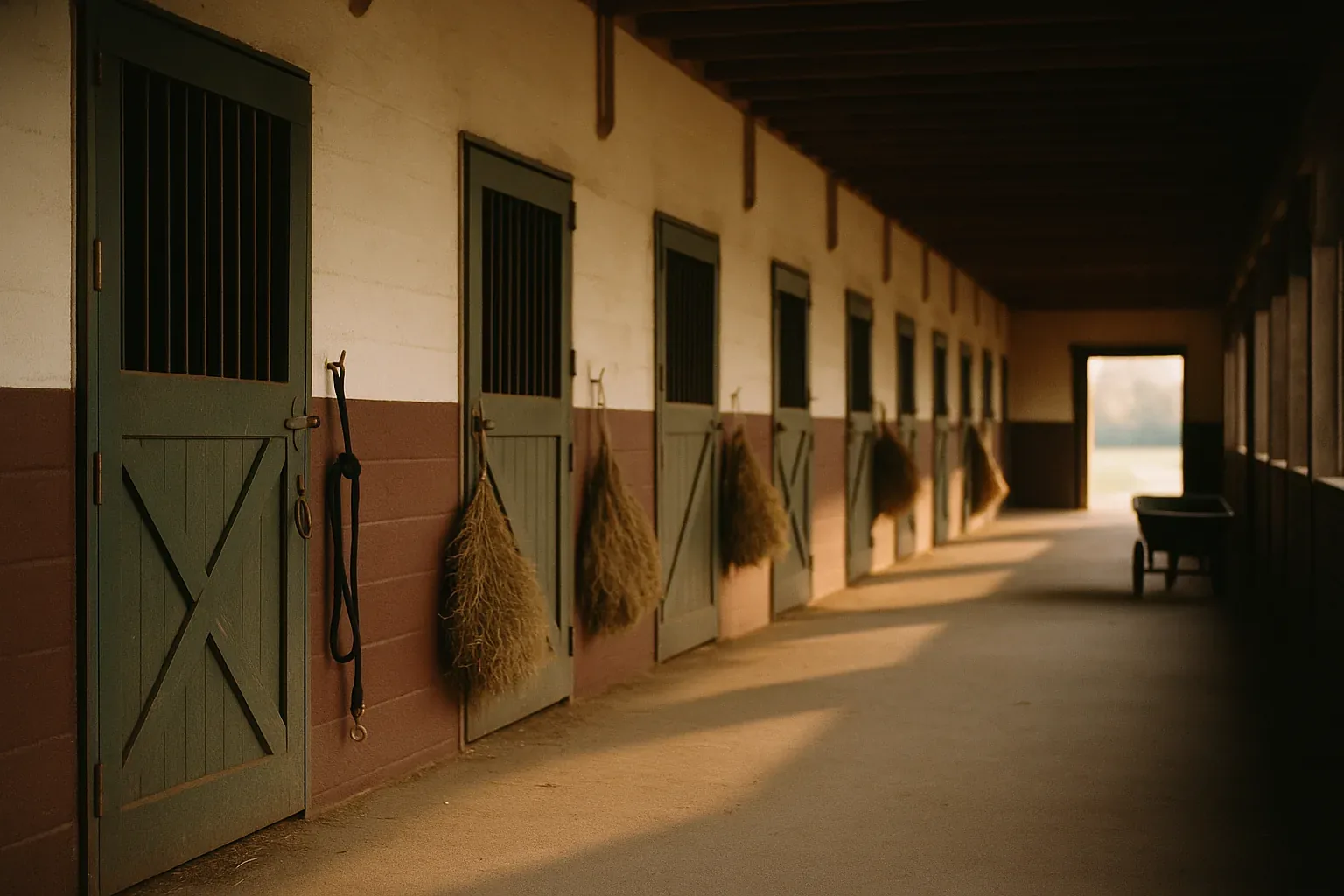
Under a standard racehorse lease the lessee pays the day rate, the vet, the farrier, the shipping, the entries and the jockey — the same running bills an outright owner pays, for a horse they will not keep. Nothing about the barn changes because the horse is leased. The trainer bills whoever is racing the horse, the vet attends whoever’s horse is in the stall, and the racing office collects entry fees from the owner of record, who is you.
This is where lease arithmetic goes wrong for first-time lessees, and it goes wrong in a repeatable way. The lease fee gets negotiated because it is the number on the table when the deal is done. It is rarely the number that decides the outcome. Consider an owner who spends two weeks pushing a lessor down on the fee, then settles the training arrangement in a single phone call — and finds four months later that the reduction is worth less than one month of the bill nobody discussed.
The lease fee is almost never the largest cheque you write. It is just the only one anybody negotiates.
The test before signing is arithmetic rather than instinct: add the lease fee to a realistic estimate of a full term’s training, veterinary and racing costs, then ask whether you would pay that total for the season if the horse never won a race. If the answer is no, the lease is not affordable, and negotiating the fee will not make it so. The trainer decision moves that total more than anything else, which is why we treat vetting a trainer as a financial exercise rather than a social one.
Purse money, vet bills and insurance: who is responsible
In a racehorse lease the lessee normally collects the purse as owner of record and pays the veterinary bills, while the insurance clause is the one most often left vague. Each of the three fails differently.
Purse money: the lessee collects it, less the lessor’s share
Purses are paid to the horse’s owner of record, and during the lease that is the lessee. What reaches your account is the purse less the jockey’s and trainer’s customary percentages, less any track or horsemen’s deductions, and less whatever share of earnings the lease promises the lessor. A lease structured as a share of earnings rather than a flat fee is not automatically cheaper; it is the structure that costs you most precisely when the horse is running well.
Veterinary bills: the seam is who authorises major spend
Routine work is uncontroversial — the lessee pays it. The seam is major spend. Colic surgery, a fracture repair, a long lay-up: who authorises the treatment, who pays for it, and can the lessor refuse a procedure on an animal that is legally theirs while you are the one racing it? A lease that sets no threshold above which the lessor must be consulted has left the most expensive decision in the arrangement undefined.
Insurance: the lessee often pays a premium that protects the lessor
The horse is the lessor’s asset, so leases commonly require the lessee to carry and pay for mortality cover with the lessor as beneficiary. That structure is defensible — the person with the horse in their barn is the one who can arrange the policy. But a lessee should see plainly what they are buying: a premium they pay, on a policy that pays somebody else, on a horse they will never own. If the horse dies mid-term the lessor is made whole and the lessee has bought a season that ended early. Our guide to mortality insurance covers what the policies do; the lease decides who benefits.
Your lease needs the stewards’ approval, and they can withdraw it
In Kentucky, a horse may be raced under lease only with the approval of the stewards, who may suspend or void that approval at any time. The rule sits in 810 KAR 4:090, the Kentucky Horse Racing Commission’s regulation on race horse owners, and it is worth reading before you sign anything, because it sets out what a lease must contain to be raceable at all.
Four requirements in that regulation shape what your lease has to say:
- The lessee must be licensed as an owner, and the lessor licensed as an owner or eligible to be licensed as one.
- The lease must specify the minimum price for which the horse may be entered, and the name of the payee of the claiming price.
- Lessees licensed as owners must be designated on the race programme as lessees of each leased horse.
- Ownership disclosure reaches through the arrangement, calling for written disclosure of all persons holding an interest directly or indirectly, including through a lease.
Two things follow for a lessee. A lease is not a private arrangement between two parties but a regulated one the stewards can end. And you appear in public as a lessee rather than simply as an owner, because the programme says so — anyone who has described leasing as a discreet way to get an owner’s licence and a horse in your silks has described something the rules do not offer.
Kentucky’s rule is representative rather than universal, and requirements differ state by state; Thoroughbred OwnerView maintains a directory of state racing commissions where you can find yours. This piece is editorial information rather than legal advice, and a lease is a contract with regulatory consequences — have an equine attorney in the relevant state read yours before you sign.
The claiming clause that decides who gets paid if your horse is taken

A racehorse lease must state the minimum claiming price the horse may be entered for and name who receives that claiming price if the horse is claimed. That requirement, buried in the middle of a regulation most lessees never open, is the most consequential sentence in the whole arrangement.
In a claiming race, any licensed owner may buy the horse for a set price by filing a claim before the race is run, and the transfer happens whether or not the horse wins, finishes or comes back sound. It is the ordinary way horses change hands in American racing, and the process itself is straightforward. What is not straightforward is what happens when the horse being claimed is one you are leasing.
A leased horse in a claiming race is the one position in racing where you pay for the campaign and somebody else collects the sale.
At the moment the race goes off, the horse belongs to the claimant, and your lease has nothing left to attach to. You have paid the lease fee, you have paid the campaign’s bills, and the claiming price — the money the horse just sold for — goes to whoever the lease names as payee. Because the horse was the lessor’s asset, that payee is normally the lessor. This is not sharp practice; the lessor is the one losing the animal. It is a structural fact a lessee needs to see in advance, because it means a leased horse in a claiming race is a position where you carry the cost of running and someone else collects the proceeds of the sale.
Two related questions belong in the same clause and are frequently missing from it:
- What happens to the remainder of your term, and to any fee you paid in advance for months you will now not get?
- Can the lessor set a claiming floor high enough that you effectively cannot enter the horse where it is competitive? The minimum price is theirs to set, and a horse entered above its level does not win.
Ask both in writing before you sign, and understand that dropping a horse into a claiming race may be a decision the lease has already made for you.
Ten clauses to read before you sign a racehorse lease
Ten clauses decide almost everything about a racehorse lease. Work through them in order, get the answers in writing, and treat a vague answer on any of them as an answer in itself. The discipline is the same one that applies when you read a syndicate or partnership agreement: the document is the deal, and the conversation around it is not.
- Term. Exact start and end dates, not “the 2026 season”, and what happens if the horse is still in training on the last day.
- The fee, and when it is payable. A lump sum, instalments, or nothing up front against a share of earnings. Get the payment dates on the page.
- The earnings split. What percentage of purses the lessor takes, whether it is calculated gross or after jockey and trainer percentages, and when it is paid over.
- Cost allocation, itemised. Day rate, veterinary, farrier, shipping, entry fees, jockey mounts, regulatory and industry fees. “The lessee pays expenses” is not itemised.
- Veterinary authority. The threshold above which the lessor must be consulted, who decides, and who pays for major treatment or a lay-up.
- The claiming floor and the payee. The minimum price the horse may be entered for, who receives the claiming price, and what happens to your remaining term if the horse is claimed.
- Insurance. Who arranges mortality cover, who pays the premium, who is named as beneficiary, and whether liability cover is required as well.
- Injury and early termination. What happens if the horse is injured, breaks down or is retired mid-term, and whether any part of a prepaid fee is refunded.
- Breeding and residual rights. Assume the lessor keeps everything unless the lease says otherwise, and if a share of a future sale or stud value has been promised, find it in the document.
- Return condition and shipping. Where the horse goes at the end of the term, who pays to ship it there, and what condition it is expected to be returned in.
When leasing a racehorse makes sense, and when it does not

Leasing a racehorse makes sense when what you want is a season of racing, and makes poor sense when what you want is an asset. That is the whole test, and most bad lease decisions come from buyers who answered it one way and then behaved as though they had answered it the other.
When a racehorse lease works
Leasing tends to work when you want to learn the mechanics of ownership — the licensing, the racing office, the trainer relationship, the rhythm of a campaign — before committing purchase capital. It works when there is a specific horse and a specific target you want it aimed at, and when the horse’s residual value was never the point, which is often true of a gelding or an older campaigner. It works when you can absorb a full term of running costs without needing the horse to earn.
When a racehorse lease does not work
Leasing tends not to work when you are buying for the upside — appreciation, a breeding prospect, an asset to sell. It fails when the lease fee plus expected running costs approaches what it would cost to claim a comparable horse outright, because at that point you are renting at a premium and keeping none of the residual. And it fails when the lease is offered as the entry-level version of ownership: leasing is a different transaction with a different ending, and a buyer who takes one believing they are on a ladder will be surprised when the term runs out and the horse goes home. If a ladder is what you want, a syndicate share with fees you have actually audited keeps you on one; a lease does not.
Questions owners ask about racehorse leases
Do I own the horse if I hold a lease interest?
No. A lease interest is a contractual right to race a horse for a set term; legal title stays with the lessor and the horse returns to them when the term ends. For racing purposes you are treated as the owner — you hold the owner’s licence and the horse runs in your name and silks — though in Kentucky the programme must designate you specifically as a lessee. For asset purposes you own nothing.
Who gets the purse money when a leased racehorse wins?
The lessee, as the horse’s owner of record, receives the purse — less the jockey’s and trainer’s customary percentages, less any track or horsemen’s deductions, and less whatever share of earnings the lease promises the lessor. Where a lease is structured as an earnings share rather than a flat fee, the lessor’s cut comes out of every winning purse, so read the split and its timing before you sign.
Can a leased racehorse be claimed?
Yes, if it is entered in a claiming race, and Kentucky’s rule requires the lease to state the minimum price the horse may be entered for and to name who receives the claiming price. That payee is normally the lessor, since the horse being sold is their asset. For a lessee, a claim ends the lease early, ends the campaign, and hands the proceeds to someone else — so settle what happens to your remaining term before the horse ever runs.
Do I need an owner’s licence to lease a racehorse?
Yes. Kentucky’s regulation requires the lessee to be licensed as an owner and the lessor to be licensed or eligible to be licensed, and it requires the stewards to approve the lease before the horse races under it. Requirements vary by state, so check with the racing commission where the horse will run and allow time for licensing before the term starts.
Read the claiming clause first. It is one of the shortest paragraphs in a lease agreement, it is the one most lease conversations skip entirely, and it is the only one that can end your season in the time it takes a race to be run.
About the Author

Calvin Johnson is a Thoroughbred racehorse owner, day trader, and independent racing analyst with more than a decade of firsthand ownership experience. He has participated in nearly every common structure in horse racing — fractional platform shares, traditional syndicates, LLC partnerships, claiming ventures, and outright ownership — across more than two dozen horses. Calvin writes about racehorse ownership the same way he approaches markets: by studying risk, incentives, fees, and whether the people controlling the deal are aligned with the investors behind it.
- Calvin Johnsonhttps://racehorseownership101.com/author/calvin-johnson/

- Calvin Johnsonhttps://racehorseownership101.com/author/calvin-johnson/

- Calvin Johnsonhttps://racehorseownership101.com/author/calvin-johnson/

- Calvin Johnsonhttps://racehorseownership101.com/author/calvin-johnson/